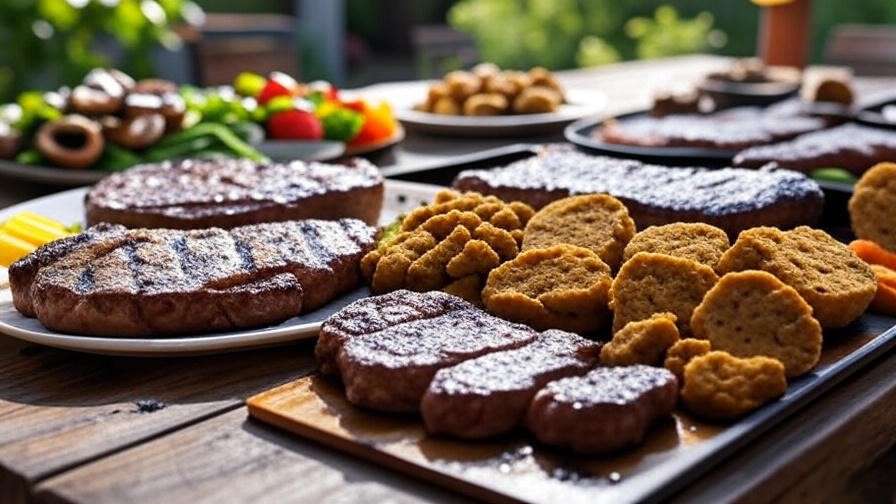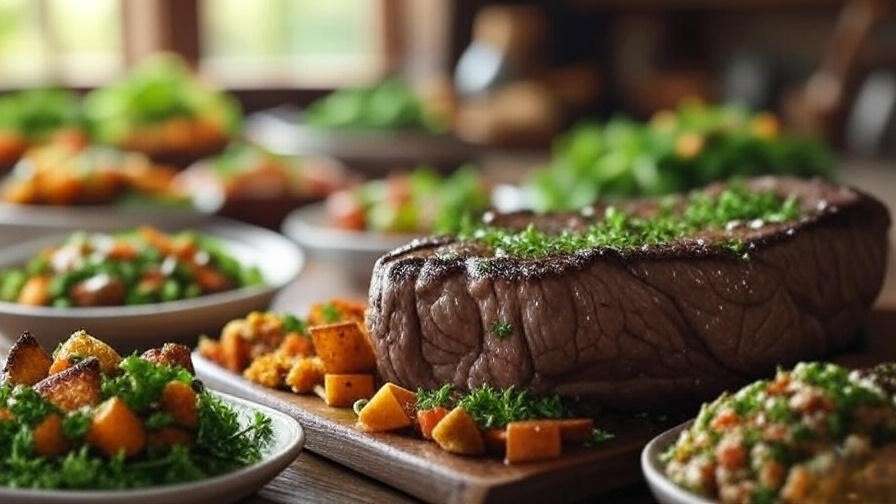
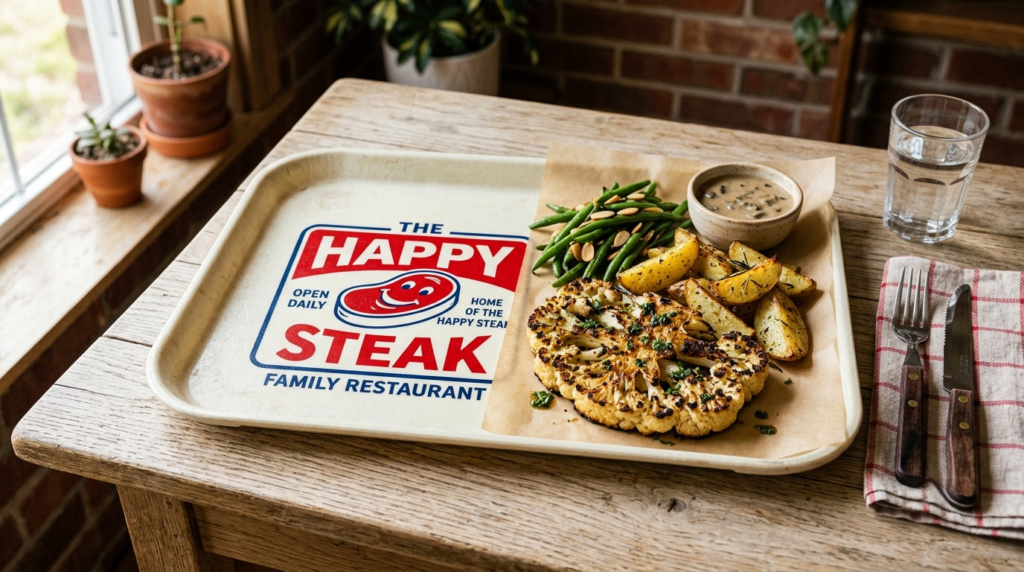
Picture walking into a classic 1970s diner: the smell of fresh coffee, the crackle of vinyl booths, and the clatter of heavy-duty platters hitting the Formica tables. For collectors of retro Americana, capturing a piece of that era is a thrilling pursuit. In fact, if you are currently hunting for the happy steak restaurant tray for sale, you are part of a growing community dedicated to preserving vintage restaurant memorabilia.
But what happens when you bring this classic, historically meat-centric kitchenware into a modern, eco-conscious, plant-based home?
You upcycle. Reclaiming vintage diner gear for plant-based feasts is a fast-growing trend that perfectly bridges the gap between mid-century nostalgia and modern, sustainable living. This comprehensive guide will walk you through exactly where to source these rare trays, how to properly and safely restore them for food use, and how to plate the ultimate cruelty-free vegan “steak” dinner that will look spectacular on your new retro find.
The Hunt: Where to Find “The Happy Steak Restaurant Tray for Sale”
Expert Insight: Vintage restaurant supply items—especially branded trays from regional chains or iconic diners—are highly sought after. Because they were commercial items, they were subjected to heavy wear and tear, making mint-condition pieces exceptionally rare.
When searching for specific retro diner platters, you need a strategy. You aren’t just looking for a generic serving dish; you are hunting for a piece of mid-century commercial art.
Navigating Online Marketplaces for Vintage Restaurant Gear
The digital landscape is your best friend when looking for niche antiques. Here is how to optimize your search:
-
eBay and Etsy: These are the gold standards for retro restaurant memorabilia. Do not just search the exact keyword once and give up. Set up automated email alerts for terms like “The Happy Steak tray,” “vintage diner serving platter,” and “retro fiberglass restaurant tray.”
-
Specialty Vintage Sites: Websites like Chairish or Ruby Lane occasionally feature higher-end commercial kitchenware. While pricier, these items are often vetted for authenticity by expert dealers.
Decoding Condition and Price
When you finally see that tray pop up online, how do you know if it is a good deal? Use this quick reference guide to assess vintage restaurant gear:
| Condition Grade | Characteristics | Estimated Value Impact |
| Mint/Near Mint | No deep scratches, vibrant logo paint, no warping. | Premium Price (Collector Level) |
| Excellent/Good | Minor surface scuffs from stacking, slight fading, structurally sound. | Market Average (Best for Upcycling) |
| Fair/Poor | Deep gouges, chipping edges, heavy discoloration, melted spots. | Bargain Price (Display Only) |
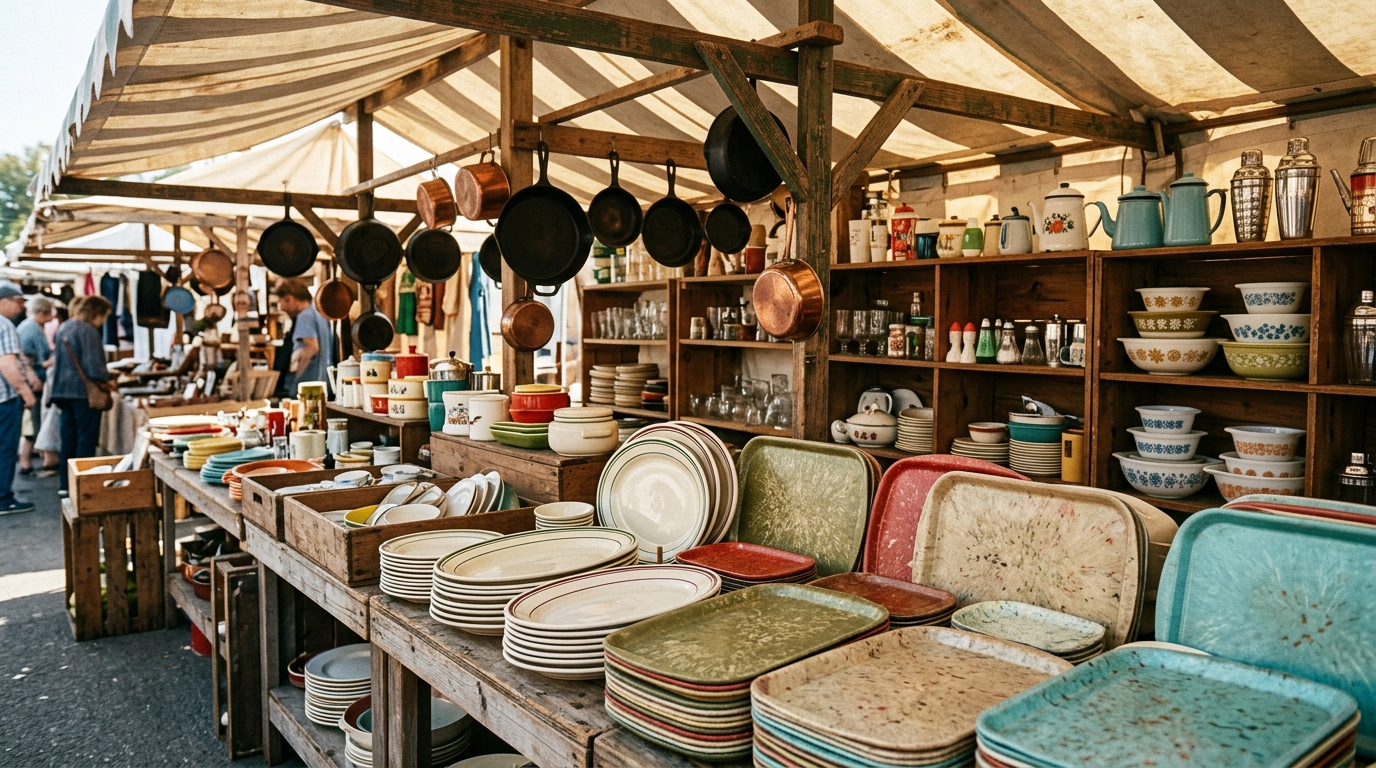
Offline Thrills: Thrift Stores, Flea Markets, and Estate Sales
While online alerts are efficient, nothing beats the thrill of finding a vintage piece in the wild.
-
The Best Times to Shop: Estate sales hosted by former restaurant owners, managers, or mid-century collectors are goldmines. Arrive on the first day of the sale within the first hour to beat professional antique flippers to the kitchenwares section.
-
Networking with Antique Dealers: Find local antique malls that feature booths specializing in mid-century modern (MCM) decor or retro kitchenware. Leave your contact information and your specific “in search of” list with the dealers. They often buy estates in bulk and can keep an eye out for your desired tray.
 Why Upcycle Vintage Steakhouse Gear for a Plant-Based Diet?
You might be wondering: why would a vegan or plant-based eater want a tray explicitly branded for a steakhouse? The answer lies in the beautiful intersection of sustainability, irony, and culinary creativity.
The Intersection of Eco-Friendly Living and Retro Kitchenware
The core of a plant-based diet is often rooted in reducing one’s environmental footprint. Buying second-hand, vintage kitchenware aligns perfectly with this ethos.
-
Diverting Waste: Every time you purchase a vintage platter instead of a newly manufactured plastic or ceramic dish, you are keeping non-biodegradable materials out of landfills.
-
Built to Last: Mid-century commercial kitchenware was engineered to survive hundreds of runs through industrial dishwashers. By upcycling these trays, you are utilizing some of the most durable materials ever made, ensuring they get a second life rather than gathering dust.
Reclaiming the Narrative: Compassionate “Steaks”
There is a distinct, playful irony in serving a beautifully charred, 100% cruelty-free cauliflower or seitan steak on a vintage “Happy Steak” tray. It reclaims the narrative of the traditional American steakhouse dinner. It proves that you do not need meat to enjoy a hearty, satisfying, visually stunning, and nostalgic dining experience. Furthermore, plating your modern, plant-based recipes on retro gear makes for incredible food photography and a fantastic conversation starter at dinner parties.
Food Safety First: Restoring Your Vintage Tray
Safety Warning: This is the most crucial step in upcycling vintage kitchenware. Regulations regarding plastics, paints, and glazes were vastly different decades ago. Never assume a vintage item is immediately food-safe.
 How to Clean Decades of Wear Without Damaging the Logo
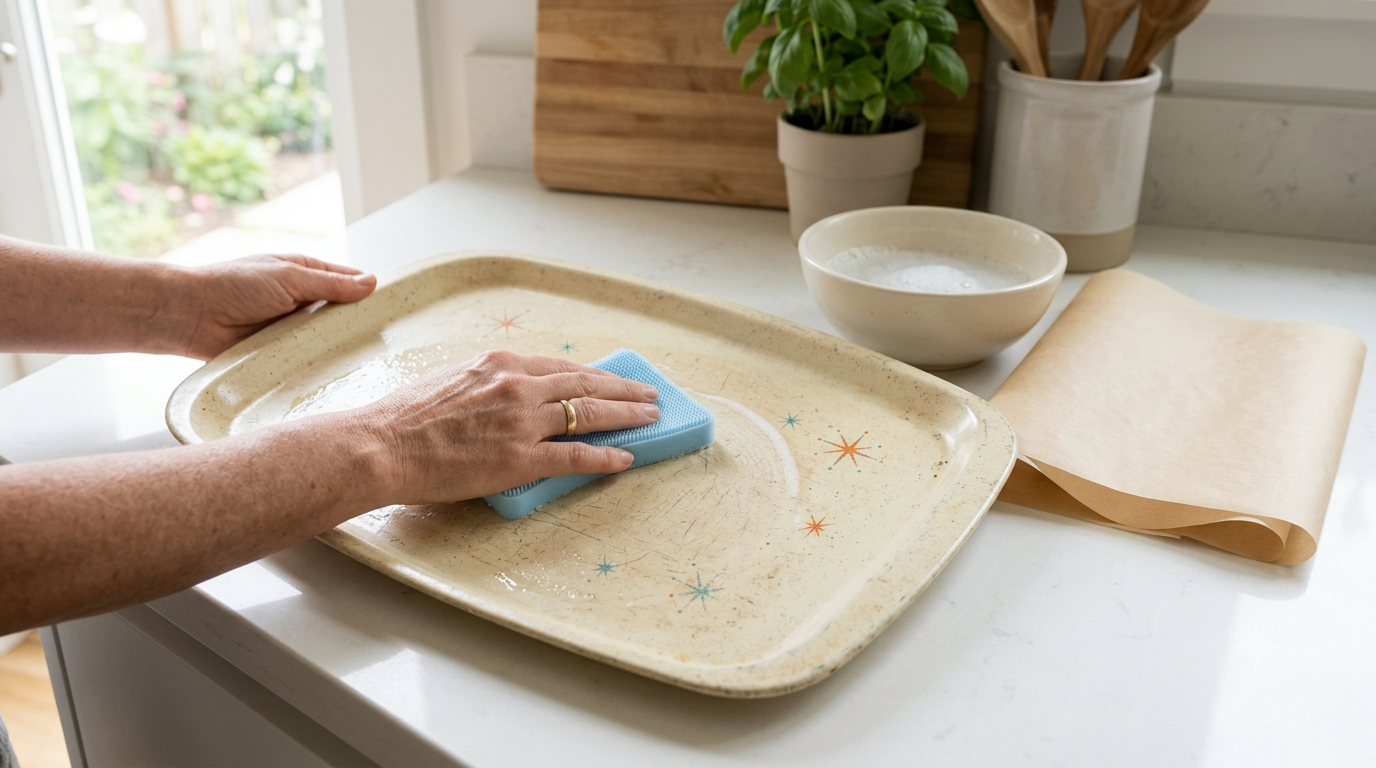
Vintage trays are typically made from early heavy-duty plastics, fiberglass, or melamine. If you use harsh modern chemical cleaners or abrasive scouring pads, you risk permanently destroying the branded logo you worked so hard to find.
Safe Solvents and Gentle Scrubbing:
-
The Soak: Submerge the tray in warm (not boiling) water mixed with a few drops of mild, unscented dish soap. Let it sit for 15 to 20 minutes to loosen decades of commercial kitchen grease.
-
The Scrub: Use a soft-bristled toothbrush or a non-abrasive silicone sponge. Gently work in circular motions over the logo.
-
Stain Removal: For stubborn stains, create a paste of baking soda and water. Apply it to the stain, let it sit for 5 minutes, and gently wipe away.
-
Avoid at All Costs: Bleach, acetone, wire brushes, and the dishwasher. The extreme heat of a modern dishwasher can warp vintage fiberglass and cause old plastics to leach chemicals.
Making Vintage Trays Food-Safe for Modern Meals
Even after a deep clean, eating directly off of mid-century commercial trays poses health risks. Older plastics can break down over time, releasing microplastics or chemicals like BPA. Additionally, the paints used for the logos may contain lead.
The Solution: Clever Liners and Platters
You can still enjoy the aesthetic of the tray without the food touching the vintage surface directly.
-
Unbleached Parchment Paper: Cut a piece of high-quality, unbleached parchment paper to fit the center of the tray. This provides a rustic, diner-style barrier that looks incredibly authentic while keeping your food safe.
-
Custom-Cut Glass Inserts: If you want to use the tray frequently, take it to a local glasscutter and have a piece of tempered glass cut to fit the exact dimensions of the base. This provides a clear, 100% food-safe surface that allows the “Happy Steak” logo to shine through completely unobstructed.
-
The “Tray as a Charger” Method: Place smaller, modern ceramic plates or cast-iron skillets directly on top of the tray. The vintage tray acts as a decorative charger or carrying platter, framing your plant-based meal perfectly.
The Ultimate Plant-Based “Steakhouse” Experience
E-E-A-T Focus: Crafting plant-based dishes that mimic the savory, satisfying nature of a traditional steakhouse requires an understanding of umami, texture, and proper cooking techniques.
Now that your vintage piece is clean, safe, and ready for action, it is time to focus on the food. Serving a meal on a mid-century diner platter demands food with character. You want recipes that offer the hearty, savory, “stick-to-your-ribs” satisfaction of classic Americana dining, but crafted entirely from plants.
Recreating the Classic Diner Vibe, Vegan Style
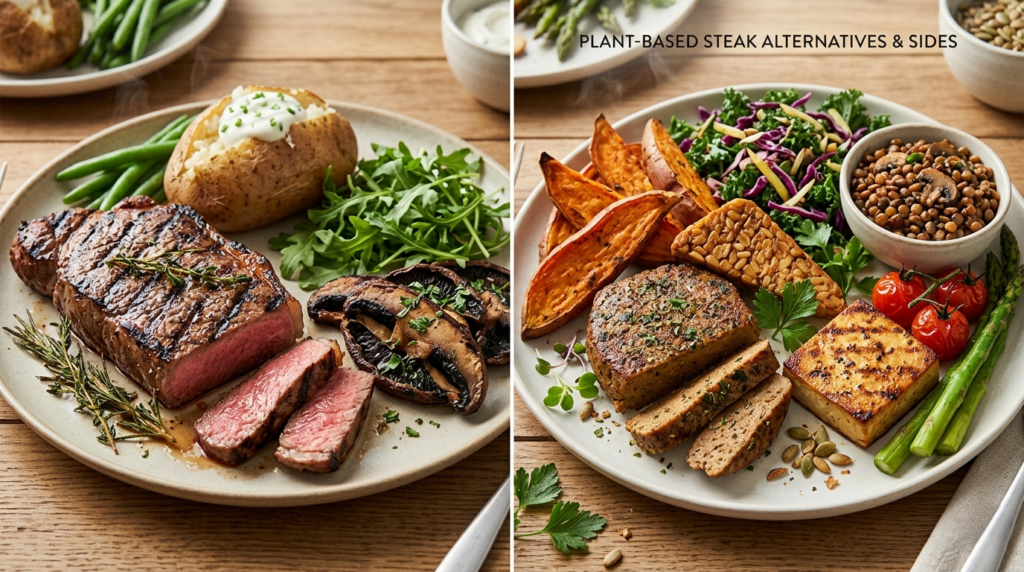
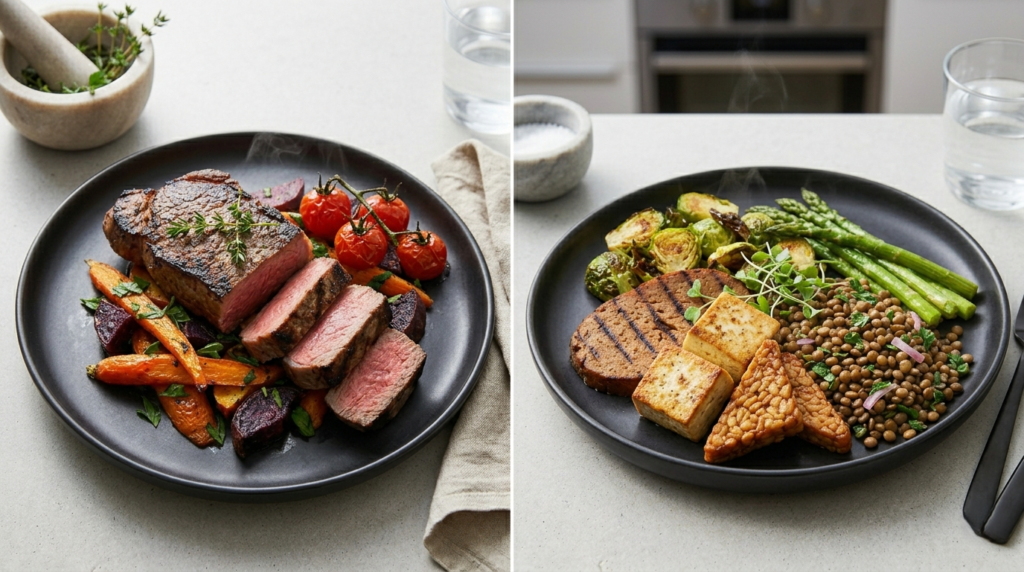
The secret to a great steakhouse experience is not just the protein; it is the entire plate’s composition. To truly honor the aesthetic of your vintage tray, pair your plant-based steaks with traditional diner-style sides. Think thick-cut potato wedges dusted with smoked paprika, perfectly blistered green beans with toasted almonds, or a rich, dairy-free creamed spinach made with cashew cream.
When you plate the food, let the tray dictate the layout. If the tray has designated compartments, use them. If it is a flat platter, place your main “steak” slightly off-center, allowing the vintage logo to peek through, framed by your vibrant sides.
3 Show-Stopping Plant-Based Steak Recipes
These three recipes are specifically designed to offer robust flavors, satisfying chew, and a stunning visual contrast against retro serving ware.
1. The Charred Cauliflower Steak with Chimichurri
Cauliflower is a master of absorbing flavors and taking on a beautiful caramelization when roasted at high heat.
-
The Cut: Slice a large, dense head of cauliflower directly down the center to yield two thick, 1.5-inch “steaks” (keep the core intact so the florets hold together).
-
The Cook: Sear both sides in a hot, oiled skillet for 3 minutes per side to achieve a deep golden-brown crust. Transfer to a 400°F oven for 15 minutes until fork-tender.
-
The Finish: Drizzle generously with a bright, herbaceous chimichurri sauce (fresh parsley, cilantro, garlic, olive oil, and red wine vinegar). The vibrant green sauce against the charred cauliflower and the vintage tray makes for an incredible visual presentation.
2. Umami-Rich Marinated Portobello Steaks
Portobello mushrooms naturally possess a dense, meaty texture and an earthy flavor profile that makes them an ideal steak substitute.
-
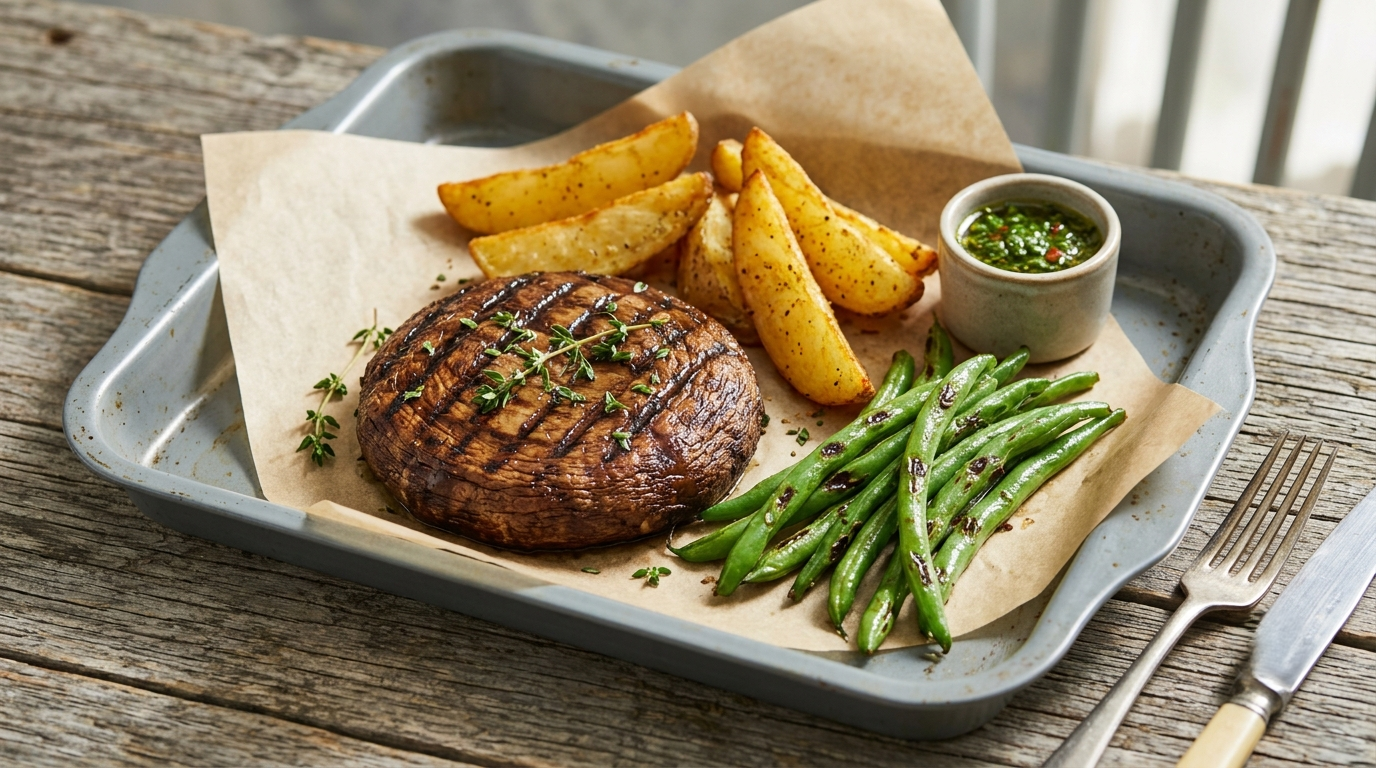
The Marinade: Whisk together 1/4 cup balsamic vinegar, 2 tablespoons low-sodium soy sauce (or tamari), 1 tablespoon olive oil, 2 cloves of minced garlic, a teaspoon of smoked paprika, and a single drop of liquid smoke.
-
The Prep: Remove the mushroom stems and gently scrape out the black gills (this prevents them from turning mushy). Marinate the caps for at least 30 minutes.
-
The Cook: Grill or pan-sear the mushrooms over medium-high heat for 4 to 5 minutes per side, pressing down gently with a spatula to release the juices and create a dense, meaty bite. Serve whole on your parchment-lined vintage tray.
3. The Iron-Skillet Seitan “Steak”
For the ultimate protein-packed, hearty meal that looks and chews most like a traditional diner steak, vital wheat gluten is your best ingredient.
-
The Dough: Combine vital wheat gluten with a blended mixture of vegetable broth, tomato paste, soy sauce, nutritional yeast, and steak seasoning. Knead the dough until it develops tough, elastic strands.
-
The Shape and Steam: Shape the dough into rustic, oblong patties. Wrap tightly in foil and steam for 40 minutes. This crucial step sets the firm texture.
-
The Sear: Unwrap the steamed seitan and sear it in a hot cast-iron skillet with vegan butter and fresh rosemary sprigs, basting the “steak” until it forms a dark, crusty exterior. Transfer the cast-iron skillet directly onto the vintage serving tray (using a heat-proof trivet) for an authentic, sizzling presentation.
Styling Your Vintage Tray for Google Discover & Social Media
If you run a plant-based blog or an eco-friendly Instagram account, this upcycling project is premium content. To increase the chances of your article or photo appearing in Google Discover feeds, your visual storytelling must be flawless.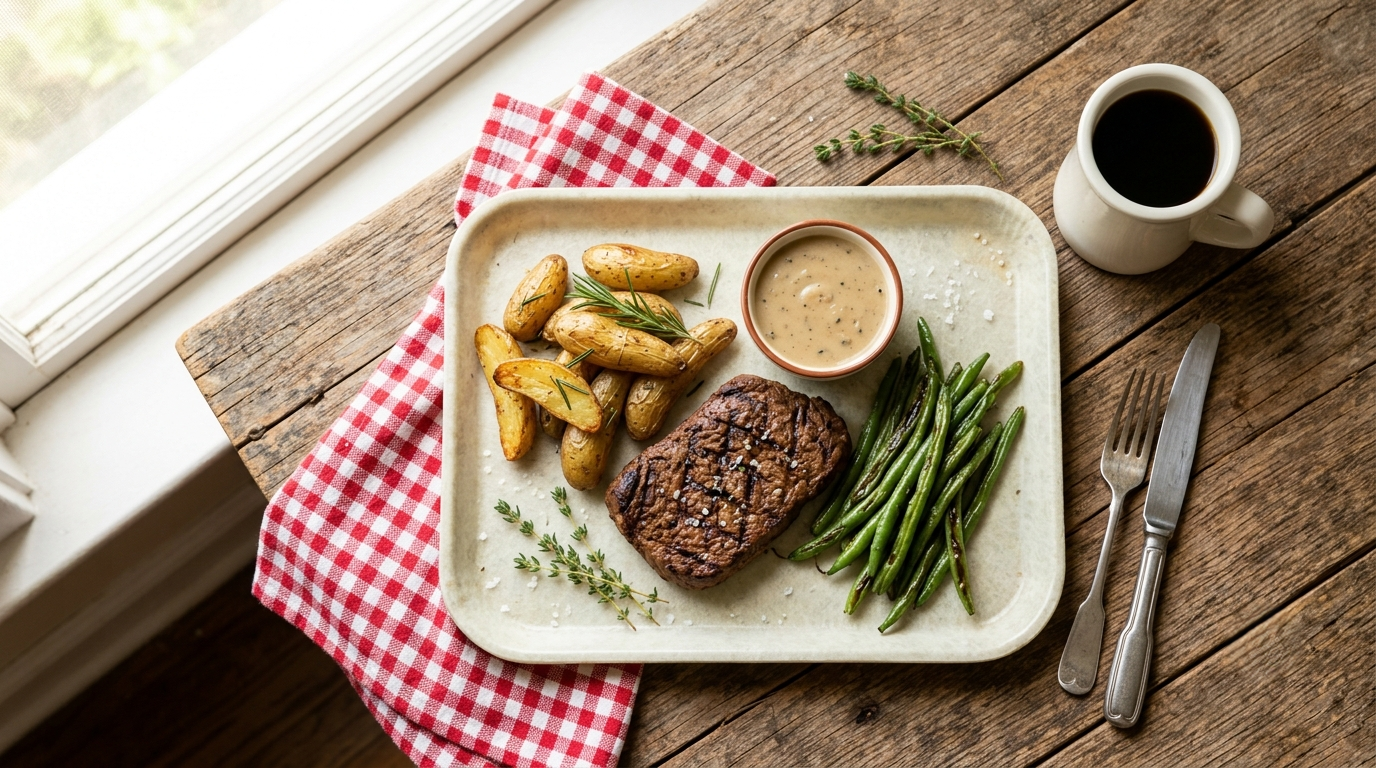
Capturing the Perfect Retro-Modern Food Photo
Google Discover heavily favors high-quality, high-resolution imagery. A blurry snapshot under harsh kitchen lights will not cut it.
Lighting the Scene
Always rely on natural, indirect sunlight. Set up your shot near a large window. Position the tray so the light hits the food from the side or slightly from behind. This technique highlights the texture of the plant-based steaks, makes sauces look glossy, and brings out the authentic patina and slight scuffs on your vintage tray, proving its age and history. Turn off all overhead artificial lights to avoid yellow or blue color casting.
Props and Composition
Enhance the retro diner aesthetic by adding supporting props that tell a story.
-
Textiles: Use a classic red-and-white checkered cloth napkin or a faded vintage dish towel.
-
Tableware: Source heavy-duty diner coffee mugs (the classic C-handle style), vintage stainless steel cutlery, and ribbed glass salt and pepper shakers.
-
Action Shots: Include a shot of a fork cutting into the vegan steak or a hand pouring a dark, rich mushroom gravy over the plate. Action creates movement and stops people from scrolling past your content.
Frequently Asked Questions (FAQs)
SEO Value: Anticipating user questions is critical for securing Google’s “People Also Ask” (PAA) rich snippets. Here are the most common questions regarding vintage diner gear and plant-based upcycling.
What material were vintage Happy Steak trays made from? Most commercial restaurant trays from the mid-20th century were manufactured from fiberglass, early forms of heavy-duty plastic, or melamine. These materials were chosen for their lightweight durability and resistance to shattering when dropped by waitstaff.
Is it safe to put vintage restaurant trays in the dishwasher? No. You should never put vintage fiberglass, melamine, or painted plastics into a modern dishwasher. The extreme heat, high water pressure, and harsh enzymatic detergents can warp the tray, strip the painted logo, and cause the vintage materials to degrade and release microplastics. Always hand wash gently with mild soap.
How do I know if my vintage kitchenware has lead paint? Paints used prior to the late 1970s often contained lead. If your vintage tray features a brightly painted, raised, or stamped logo, it is wise to test it. You can purchase inexpensive, easy-to-use lead testing swabs at most hardware stores or online. Simply wet the swab, rub it on the painted surface, and wait for a color change. Even if it tests negative, it is always safest to use a food barrier (like parchment paper or glass) between the tray and your meal.
What are the best meat substitutes for a vegan steakhouse dinner? Beyond the cauliflower, portobello, and seitan recipes mentioned above, other excellent meat substitutes include pressed extra-firm tofu (frozen and thawed to create a meatier texture), soy curls (rehydrated in beef-less broth), and commercially available plant-based steaks like those made by Meati or Beyond Meat.
Conclusion
The journey from typing “the happy steak restaurant tray for sale” into a search engine to finally serving a meal on it is a rewarding experience. It is a testament to the beauty of upcycling and the endless creativity of plant-based cooking. By taking the time to carefully source, clean, and protect these mid-century commercial relics, you are preserving a piece of Americana history while simultaneously making eco-conscious lifestyle choices.
Reclaiming a meat-centric piece of restaurant memorabilia for a compassionate, vegan feast is more than just a fun aesthetic choice—it is a statement that tradition and modern values can beautifully coexist on the same plate.
Whether you opt for a savory portobello mushroom, a hearty seitan cut, or a beautifully charred cauliflower steak, serving it on a piece of classic diner history guarantees a memorable dining experience. Remember to use unbleached parchment or a glass insert to keep your meals safe, and take plenty of photos of your stunning retro-modern creations.