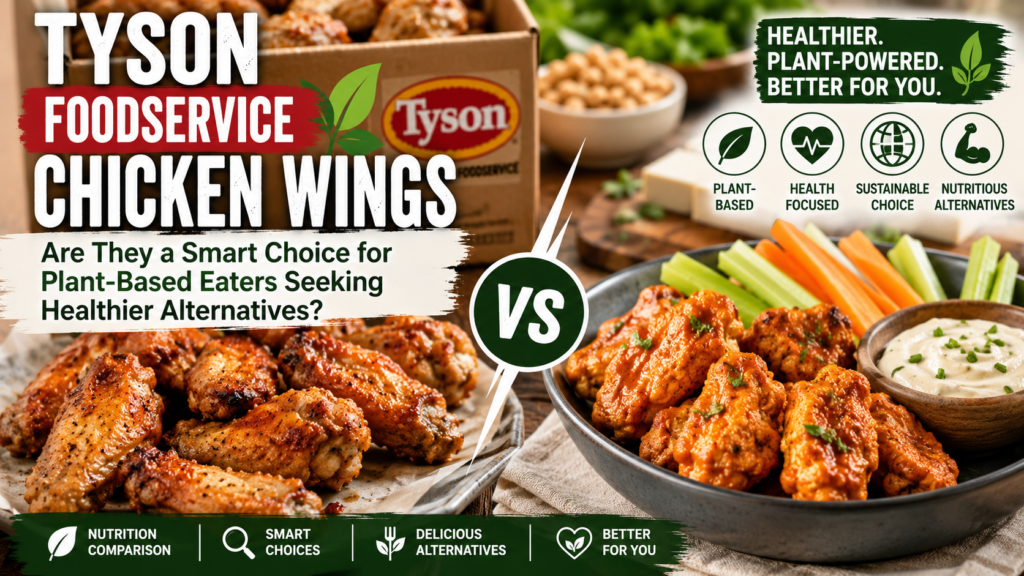
Walk into almost any sports bar, cafeteria, stadium, or restaurant kitchen, and there’s a good chance Tyson Foodservice Chicken Wings are on the menu—or in the freezer. They’re convenient, protein-packed, familiar, and widely used in foodservice settings. But if you’re focused on plant-based eating, cleaner nutrition, or reducing processed animal products, a more important question emerges: Are Tyson Foodservice Chicken Wings actually a smart choice, or are they simply another convenience food that may work against your long-term health goals?
This question matters because modern consumers are increasingly caught between convenience, protein marketing, and genuine wellness. Many flexitarians, plant-curious eaters, and even health-conscious omnivores want to know whether foodservice chicken products fit into a smarter dietary strategy—or whether plant-based alternatives offer superior benefits.
In this comprehensive expert guide, we’ll break down Tyson Foodservice Chicken Wings from every angle: nutrition, ingredients, processing, plant-based relevance, sustainability, and healthier alternatives. By the end, you’ll have a clear, evidence-informed understanding of whether Tyson wings deserve a place in your diet—or whether your body and values may be better served elsewhere.
What Are Tyson Foodservice Chicken Wings?
Tyson Foodservice Chicken Wings are bulk-produced chicken wing products designed primarily for restaurants, institutional kitchens, cafeterias, catering companies, schools, and hospitality operations. Unlike consumer grocery products, foodservice wings are optimized for:
- Large-scale preparation
- Consistency
- Cost efficiency
- Speed of service
- Flavor retention
These products often come in several forms, including:
- Raw frozen wings
- Fully cooked wings
- Breaded wings
- Buffalo-style wings
- Seasoned wings
- Oven-roasted or fried varieties
Because foodservice buyers prioritize operational convenience, these wings may differ significantly from homemade chicken wings in terms of sodium, additives, preparation methods, and overall nutritional quality.
Table of Contents
ToggleFoodservice vs Retail Chicken Wings: Why the Difference Matters
A major mistake consumers make is assuming all chicken wings are nutritionally similar.
Foodservice chicken wings often prioritize:
- Extended shelf life
- Uniform taste
- Pre-seasoning
- Industrial processing
- Bulk frying compatibility
Homemade wings often allow:
- Ingredient transparency
- Lower sodium control
- Healthier cooking oils
- Baking or air frying
- Portion flexibility
For plant-based or health-conscious readers, this distinction is critical. Tyson Foodservice Chicken Wings are not merely “chicken”—they are often part of a broader processed food ecosystem.
Typical Ingredients in Tyson Foodservice Chicken Wings
Ingredients vary by product line, but common components may include:
Base ingredients:
- Chicken wing sections
- Water
- Salt
- Flavorings
- Modified food starch
- Sodium phosphates
In breaded or flavored varieties:
- Wheat flour
- Vegetable oils
- Sugar
- Preservatives
- Artificial flavor systems
- Spice blends
Why this matters:
While chicken itself is a whole animal protein, heavily processed wing products may contain additional sodium, refined starches, and additives that reduce their alignment with clean eating principles.
Are Tyson Foodservice Chicken Wings Plant-Based?
In direct terms: No.
Tyson Foodservice Chicken Wings are animal-derived products and therefore do not qualify as plant-based.
However, the answer becomes more nuanced depending on your dietary philosophy.
Understanding the Plant-Based Spectrum
“Plant-based” is not always binary. Readers searching this keyword may fall into several categories:
Whole-Food Plant-Based (WFPB):
- Avoids all animal products
- Focuses on minimally processed plant foods
Vegan:
- Excludes all animal products for ethical and/or health reasons
Flexitarian:
- Prioritizes plant foods while occasionally consuming animal products
Plant-Forward:
- Increases plants without eliminating meat entirely
For strict plant-based consumers, Tyson wings are incompatible.
For flexitarians or transitional eaters, Tyson wings may represent a reduced-red-meat option—but not necessarily an ideal one.
Why Plant-Focused Consumers Still Search Tyson Wings
This is important from a search-intent perspective.
Many readers are not searching because they believe Tyson wings are plant-based. They may instead be asking:
- “Are chicken wings healthier than beef?”
- “Can I still eat wings while transitioning?”
- “Are foodservice wings overly processed?”
- “What are healthier alternatives to wings?”
This article solves that exact need.
Nutritional Breakdown: Are Tyson Foodservice Chicken Wings Healthy?
The answer depends on:
- Preparation method
- Breaded vs unbreaded
- Sauce
- Portion size
- Frequency
Typical Macronutrient Profile (Approximate)
A serving of prepared foodservice chicken wings may include:
Per serving:
- Calories: 180–400+
- Protein: 15–25g
- Fat: 12–30g
- Saturated fat: 3–8g
- Carbohydrates: 0–20g
- Sodium: 500–1200mg+
The Protein Advantage
Potential benefits:
- High-quality complete protein
- Muscle support
- Satiety
- Familiar convenience
This is often why Tyson wings attract athletes, busy consumers, and protein-focused eaters.
The Health Downsides
Common concerns:
1. Sodium Overload
Restaurant and foodservice wings are frequently sodium-dense.
Excess sodium can contribute to:
- High blood pressure
- Cardiovascular strain
- Water retention
- Increased chronic disease risk
2. Saturated Fat
Depending on skin content, frying method, and sauces, wings can become saturated-fat heavy.
3. Frying Oils
Deep-fried wings may expose consumers to:
- Oxidized oils
- Added calories
- Inflammatory compounds
4. Sauce Sugar
Buffalo, BBQ, honey garlic, or sweet glazes may significantly increase:
- Added sugars
- Sodium
- Caloric load
The “Protein Halo” Problem
One of the biggest nutritional misconceptions is assuming that “high protein” automatically equals “healthy.”
This is known as the protein halo effect.
A food can be:
- High in protein
- Highly processed
- High in sodium
- Fried
- Additive-rich
Tyson Foodservice Chicken Wings may deliver protein, but protein alone doesn’t define nutritional excellence.
For plant-based readers especially, fiber, phytonutrients, anti-inflammatory properties, and ingredient quality matter just as much.
Tyson Foodservice Chicken Wings vs Plant-Based Wing Alternatives
This is where the conversation becomes particularly valuable.
Modern plant-based wing alternatives have evolved dramatically and can now offer:
- Flavor
- Texture
- Protein
- Lower environmental impact
- Potentially better fiber content
 Popular Plant-Based Wing Alternatives
Cauliflower Wings
Pros:
- Low calorie
- High vegetable intake
- Excellent for lighter eating
Cons:
- Lower protein
Seitan Wings
Pros:
- High protein
- Meaty texture
- Excellent for wing-style recipes
Cons:
- Gluten-based
Tofu Wings
Pros:
- Complete protein
- Lower saturated fat
- Versatile
Cons:
- Texture adjustment for some users
Mushroom Wings
Pros:
- Whole-food option
- Rich umami flavor
- Lower calorie density
Cons:
- Lower protein than chicken
Nutrition Comparison: Chicken Wings vs Plant-Based Wings
Tyson Foodservice Wings:
Strengths:
- High protein
- Convenience
- Familiarity
Weaknesses:
- No fiber
- Often high sodium
- Environmental burden
- Animal welfare concerns
Plant-Based Wings:
Strengths:
- Fiber potential
- Lower cholesterol
- Sustainability
- Customizable ingredients
Weaknesses:
- Some commercial versions may also be processed
- Protein varies by ingredient
Environmental Impact: Chicken Wings vs Plant-Based Choices
For many plant-diet readers, nutrition is only one part of the equation.
Poultry Production Impact:
Chicken generally has a lower environmental footprint than beef, but still requires:
- Significant feed crops
- Water
- Land
- Energy
- Industrial farming systems
Plant-Based Alternatives:
Cauliflower, tofu, legumes, and mushrooms generally require:
- Less land
- Less water
- Lower greenhouse gas emissions
For sustainability-conscious consumers, plant-based wings often offer a stronger long-term solution.
Ethical Considerations
For many readers, plant-based decisions are rooted in:
- Animal welfare
- Industrial agriculture concerns
- Antibiotic use
- Food system transparency
Tyson Foodservice Chicken Wings may not align with these priorities.
Who Might Tyson Foodservice Chicken Wings Work For?
Potentially reasonable for:
- Flexitarians
- Occasional omnivores
- Restaurant diners prioritizing convenience
- Consumers transitioning from red meat
Less ideal for:
- Whole-food plant-based eaters
- Vegans
- Low-sodium diets
- Heart-health-focused consumers
- Sustainability-first lifestyles
Smart Ordering Tips: If You Still Choose Tyson Wings
If you’re not fully plant-based but want better choices:
Better strategies:
Choose:
- Naked or unbreaded wings
- Baked or roasted
- Sauce on the side
- Vegetable sides
Limit:
- Deep-fried options
- Sugary glazes
- Oversized portions
- Cream-heavy dips
These strategies can improve your nutritional profile significantly.
Better Plant-Based Alternatives for Wing Lovers
If you love wings but want to align more closely with plant-based goals, consider:
1. Crispy Cauliflower Buffalo Wings
- Excellent appetizer
- Lower calorie
- Great for reducing meat intake
2. Seitan Hot Wings
- Closest texture match
- High protein
- Meal prep friendly
3. Tofu Buffalo Bites
- Protein-rich
- Lower saturated fat
- Budget-friendly
4. Oyster Mushroom Wings
- Whole-food texture
- Crisp exterior
- Gourmet appeal
Expert Transition Tips: Moving from Chicken Wings to Plant-Based Alternatives
Behavioral nutrition matters.
Focus on:
Flavor first:
Buffalo, garlic, smoked paprika, lemon pepper
Texture second:
Air frying, breading alternatives, roasting
Protein support:
Pair lower-protein wings with:
- Edamame
- Lentils
- Bean dips
- Quinoa
This makes transition more sustainable.
Frequently Asked Questions
Are Tyson Foodservice Chicken Wings processed?
Yes, many varieties are processed to varying degrees, especially pre-cooked, seasoned, or breaded versions.
Are Tyson wings healthier than fast-food wings?
Sometimes—but preparation, sodium, and sauces matter significantly.
Can Tyson wings fit a plant-forward diet?
For flexitarians, occasionally. For strict plant-based eaters, no.
Are cauliflower wings healthier?
Often lower calorie, but protein is lower unless strategically paired.
What’s the healthiest wing alternative?
Whole-food, minimally processed options like tofu, tempeh, or mushroom wings often offer the best balance.
Final Verdict: Should Plant-Focused Consumers Choose Tyson Foodservice Chicken Wings?
Tyson Foodservice Chicken Wings may offer convenience, familiarity, and protein—but they are not inherently optimized for plant-based health goals, whole-food nutrition, or sustainability.
Bottom Line:
Choose Tyson wings occasionally if:
- You’re flexitarian
- You need convenience
- You’re transitioning gradually
Choose plant-based alternatives if:
- You prioritize long-term heart health
- You want lower environmental impact
- You seek cleaner ingredients
- You’re committed to plant-based living
For most readers in the plant diet space, Tyson Foodservice Chicken Wings are best viewed as a comparison point—not an endpoint.
The real opportunity is using your wing cravings as a gateway to smarter, more sustainable, plant-forward alternatives that support both your health and your values.
In many cases, the healthiest wing isn’t about what you remove—it’s about what you replace it with.
Reply with “Continue generating” if you’d like an expanded Part 2 with advanced FAQ schema ideas, internal linking strategy, recipe clusters, and Google Discover optimization elements.