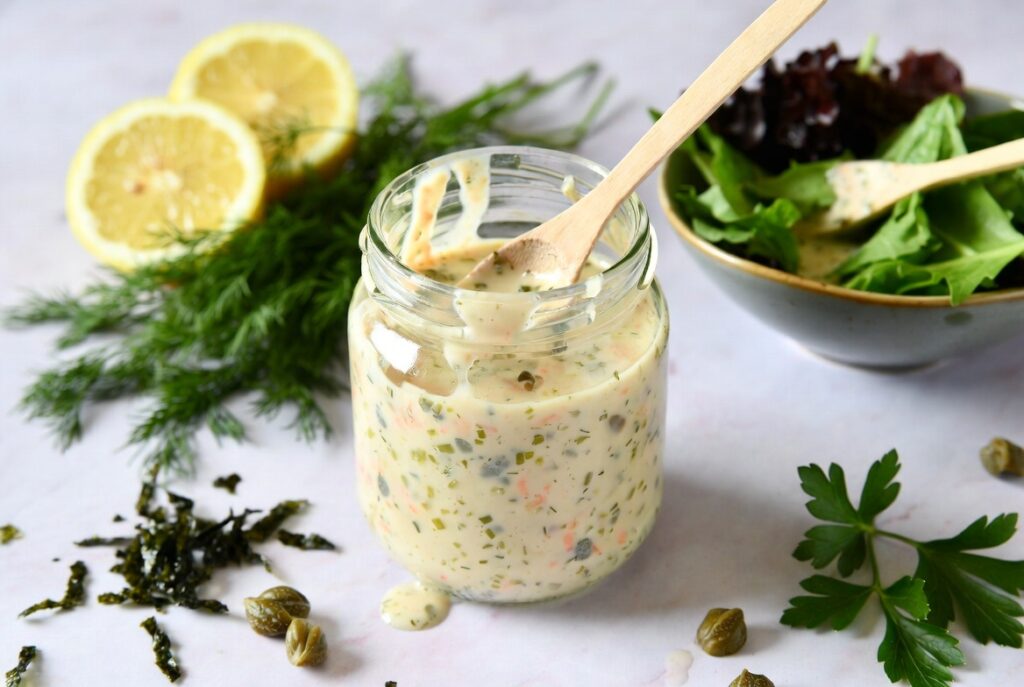
Imagine drizzling a creamy, tangy dressing over crisp greens or a hearty plant-based bowl and tasting that unmistakable briny, zesty kick reminiscent of classic seafood remoulade or tartar sauce—without a single fish or animal product involved. For anyone following a plant diet, this moment can feel like a revelation. Many crave the bold flavors of traditional seafood dressings but seek healthier, compassionate, and sustainable alternatives that fit seamlessly into whole-food, plant-powered eating.
If you’ve searched for a seafood dressing recipe only to find versions loaded with mayonnaise, eggs, or processed ingredients that don’t align with your values, you’re not alone. The good news? You can recreate that signature creamy, tangy, slightly spicy profile using simple plant-based ingredients like capers, nori, fresh herbs, mustard, and lemon. These dressings deliver authentic “seafood” taste while being lighter, customizable, and packed with flavor from nature’s pantry.
In this comprehensive guide, you’ll discover 5 delicious plant-based seafood dressing recipes—each versatile enough for everyday salads, Buddha bowls, wraps, dips, and even marinades. Drawing from years of testing in my plant-based kitchen, these recipes go beyond basic swaps. They balance creaminess, acidity, brininess, and umami while offering oil-free, nut-free, and whole-food plant-based (WFPB) options. Whether you’re new to plant eating or a seasoned enthusiast looking to elevate your meals and prevent salad fatigue, these recipes solve the real need for exciting, restaurant-quality flavors at home.
You’ll learn the science behind mimicking seafood taste, key ingredient substitutions, pro tips for perfect texture every time, creative serving ideas, and answers to common questions. By the end, you’ll have a reliable toolkit to transform ordinary salads into crave-worthy dishes that support your health, the planet, and your taste buds. Let’s dive in.
Table of Contents
- Why Plant-Based Seafood Dressing Recipes?
- Key Ingredients for Authentic Plant-Based Seafood Flavor
- 5 Delicious Plant-Based Seafood Dressing Recipes
- How to Use These Plant-Based Seafood Dressings
- Expert Tips for Perfecting Your Seafood Dressing Every Time
- Common Questions About Plant-Based Seafood Dressings (FAQs)
- Conclusion
Why Plant-Based Seafood Dressing Recipes? Understanding the Appeal
The demand for plant-based alternatives that capture the essence of seafood has surged as more people embrace diets centered on plants for health, ethical, and environmental reasons. Traditional seafood dressings—often based on mayonnaise with added pickles, capers, mustard, and spices—carry a rich, tangy, oceanic profile that pairs beautifully with crisp vegetables or plant “seafood” substitutes like hearts of palm, jackfruit, or tofu “fish.”
However, conventional versions frequently include animal-derived ingredients and higher levels of processed fats or sodium. Plant-based versions address this by using whole or minimally processed plants to recreate the experience while adding benefits like fiber, antioxidants, and lower saturated fat.
From a health perspective, swapping to plant-powered dressings can reduce inflammation-promoting elements and increase intake of beneficial compounds from herbs, citrus, and sea vegetables. Environmentally, choosing plant ingredients over animal products lowers your carbon footprint significantly. Ethically, these recipes align perfectly with a compassionate plant diet.
The flavor magic comes from understanding “seafood” taste: it’s not just one note but a harmony of brininess (from the sea), tanginess (acid), creaminess (fat/emulsion), and subtle savoriness (umami). Ingredients like nori or dulse provide that oceanic aroma naturally, while capers and pickles deliver pops of salt and acidity. Spices such as Old Bay seasoning (or a homemade blend with celery seed, paprika, and black pepper) tie it all together with a classic coastal vibe.
In my experience developing hundreds of plant-based recipes, the key to success is balancing these elements without overpowering the fresh produce in your salads. These five recipes have been refined through repeated testing to ensure they taste indulgent yet support daily wellness goals. They prove that a plant diet doesn’t mean sacrificing beloved flavors—it means discovering even more creative, vibrant ways to enjoy them.
Key Ingredients for Authentic Plant-Based Seafood Flavor
Creating a standout plant-based seafood dressing starts with understanding a few core building blocks. These ingredients work together to deliver the creamy texture, bright acidity, briny depth, and aromatic finish that define classic seafood sauces.
Creamy Base Options The foundation provides body and richness:
- Vegan mayonnaise (store-bought or homemade) for quick convenience and classic mouthfeel.
- Silken tofu for a lighter, oil-free, high-protein option that’s naturally creamy when blended. Many whole-food enthusiasts prefer this for its neutral taste and low calorie density.
- Cashew cream (soaked raw cashews blended with water) for a luxurious, nutty richness—ideal when you want more depth without added oils.
- Avocado in small amounts for a fresh, whole-food twist (though it can alter color slightly).
For the most accessible oil-free version, blend silken tofu with a touch of lemon and seasonings. This base keeps calories lower while maintaining silkiness.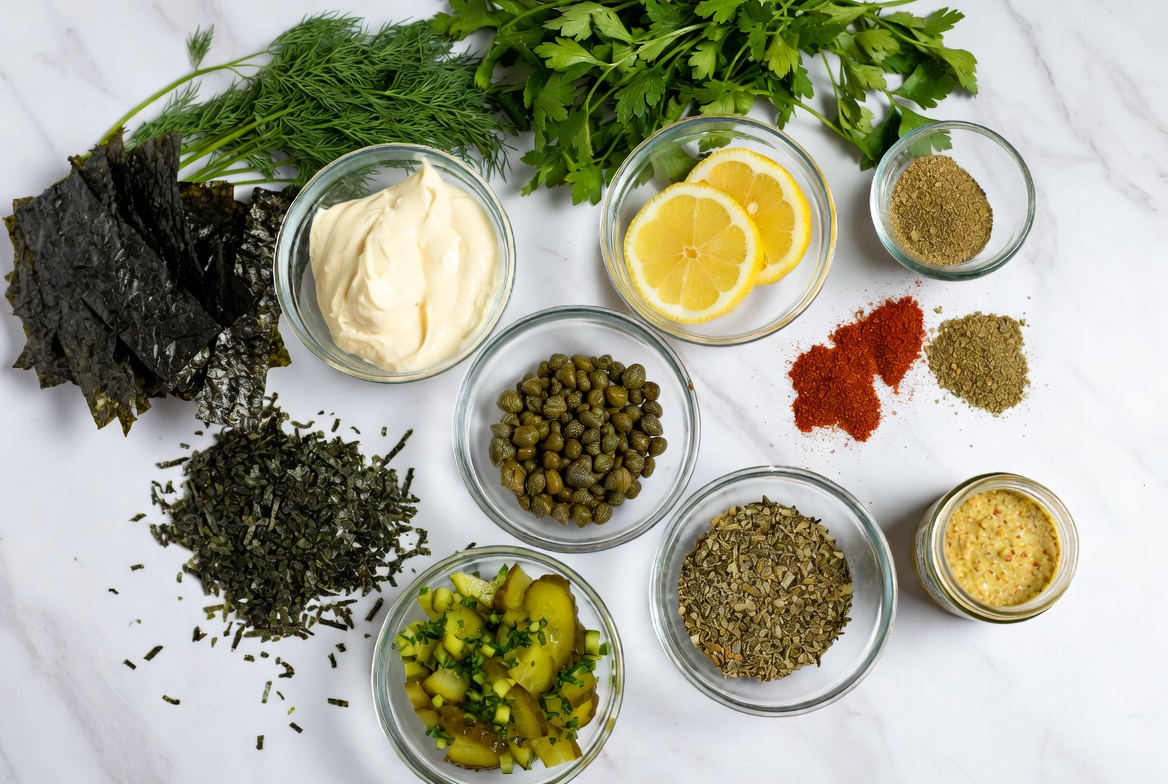
Tang and Acidity Lemon juice or apple cider vinegar brings brightness and helps cut through richness. Dijon or yellow mustard adds sharpness and acts as a natural emulsifier. A small amount of pickle or caper brine enhances tang without extra salt.
Briny and Umami Elements This is where the “seafood” character shines:
- Capers and dill pickles (or relish): Finely chopped for texture and salty, pickled bursts.
- Nori flakes, dulse, or seaweed powder: A small amount imparts genuine oceanic notes without fishiness. Toasted nori sheets blended lightly work wonderfully.
- Vegan Worcestershire sauce or tamari/miso: For deep savory umami.
- Old Bay seasoning (or DIY blend): The iconic mix of celery salt, paprika, mustard powder, and spices evokes East Coast seafood classics.
Herbs, Spices, and Boosters
- Fresh dill and parsley for herbaceous freshness.
- Garlic (fresh or powder), onion powder, and smoked paprika for aromatic layers.
- Optional heat: Cayenne, hot sauce, or horseradish for a spicy remoulade kick.
- A pinch of nutritional yeast or lemon zest for extra savoriness and brightness.
Healthier Swaps and Customizations
- Oil-free: Rely on tofu or cashew bases and skip any added oils.
- Nut-free: Stick with silken tofu or avocado.
- Lower sodium: Use reduced-sodium pickles, rinse capers, and make your own seasoning blend.
- Whole-food focused (WFPB): Use homemade bases and fresh ingredients; avoid store-bought mayo if it contains oil.
Here’s a quick substitution table for flexibility:
Shopping tip: Look for organic nori sheets, capers in brine (not vinegar-heavy), and fresh herbs when possible. These ingredients are widely available and shelf-stable, making it easy to keep them on hand for spontaneous salad upgrades.
With these fundamentals, even beginners can craft professional-tasting dressings. The recipes below build directly on this framework, offering variety from classic to bold.
5 Delicious Plant-Based Seafood Dressing Recipes
Each recipe yields about 1 cup (enough for 4–6 salads) and comes together in 5–10 minutes. Prep time is minimal—no cooking required. I’ve included approximate nutrition per 2-tablespoon serving (estimates; use a calculator for precision based on exact brands). All are naturally vegan, gluten-free adaptable, and easily scaled.
1. Classic Vegan Remoulade-Style Seafood Dressing
This is the quintessential seafood dressing recipe—creamy with a gentle Cajun-inspired kick, perfect for adding bold flavor to simple green salads or plant-based po’ boy bowls.
Ingredients (makes ~1 cup):
- ½ cup vegan mayonnaise (or ¾ cup blended silken tofu for oil-free)
- 2 tbsp Dijon mustard
- 1 tbsp fresh lemon juice
- 2 tbsp finely chopped dill pickles or relish
- 1 tbsp capers, drained and chopped
- 1 tsp vegan Worcestershire sauce (or tamari)
- 1 tsp garlic powder
- ½ tsp smoked paprika
- ½ tsp Old Bay seasoning (or homemade)
- 2 tbsp fresh parsley, finely chopped
- Salt and black pepper to taste
- Optional: ½ tsp hot sauce for extra heat
Instructions:
- In a medium bowl, whisk together the base (mayo or tofu), mustard, lemon juice, and Worcestershire until smooth.
- Stir in the chopped pickles, capers, garlic powder, paprika, Old Bay, and parsley.
- Taste and adjust seasoning—add more lemon for brightness or hot sauce for spice.
- For a smoother texture, pulse briefly in a small blender or food processor.
- Chill for 15–30 minutes to let flavors meld (optional but recommended).
Prep time: 5 minutes | Yield: 1 cup | Approx. nutrition per 2 tbsp (with mayo base): 80–100 calories, 8g fat, 2g carbs, <1g protein (varies with base; tofu version is lower fat/higher protein).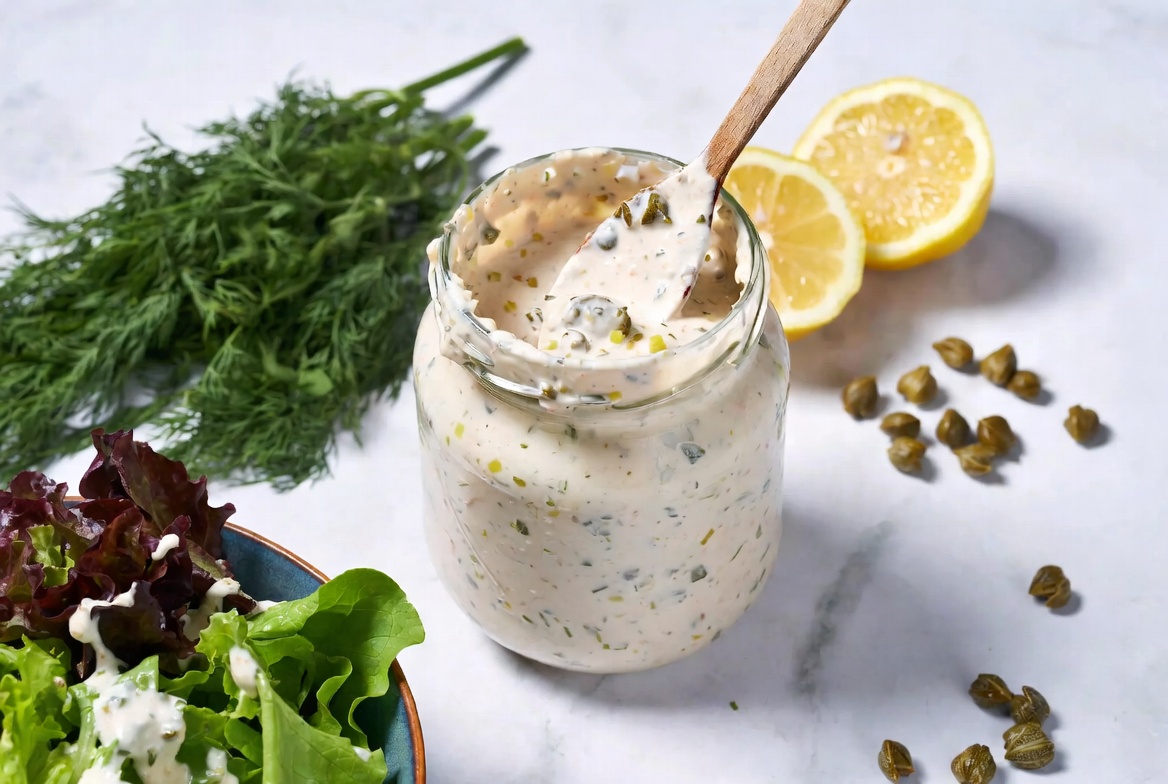
Why this works: The combination of mustard and capers creates that signature remoulade tang, while parsley and spices keep it fresh. In testing, this version consistently earns praise for balancing heat and creaminess without heaviness.
Customizations: Make it milder by reducing paprika; go fully WFPB with the tofu base.
Pairing ideas: Drizzle over a salad with shredded hearts of palm “crab,” celery, and red onion, or use as a spread for veggie wraps.
2. Tangy Vegan Tartar Sauce Seafood Dressing
A lighter, dill-forward option with crunchy pickle bits—ideal for delicate salads, “fish” tacos, or as a dip. This one highlights freshness over spice.
Ingredients:
- ½ cup silken tofu (blended smooth) or vegan mayo
- ½ cup finely chopped dill pickles
- 2 tbsp fresh dill, chopped (or 1 tsp dried)
- 1 tbsp lemon juice + 1 tsp zest
- 1 tsp Dijon mustard
- ½ tsp onion powder
- ¼ tsp garlic powder
- Pinch of Old Bay or dulse flakes for briny note
- Salt and pepper to taste
Instructions:
- Blend the base until ultra-creamy if using tofu.
- In a bowl, combine all ingredients and stir well. For chunkier texture, leave pickles slightly larger.
- Adjust acidity and seasoning. Refrigerate to thicken slightly.
Prep time: 5 minutes | Yield: ~1 cup | Nutrition highlight: Lower calorie with tofu base (~40–60 cal per 2 tbsp), good source of hydration from pickles and lemon.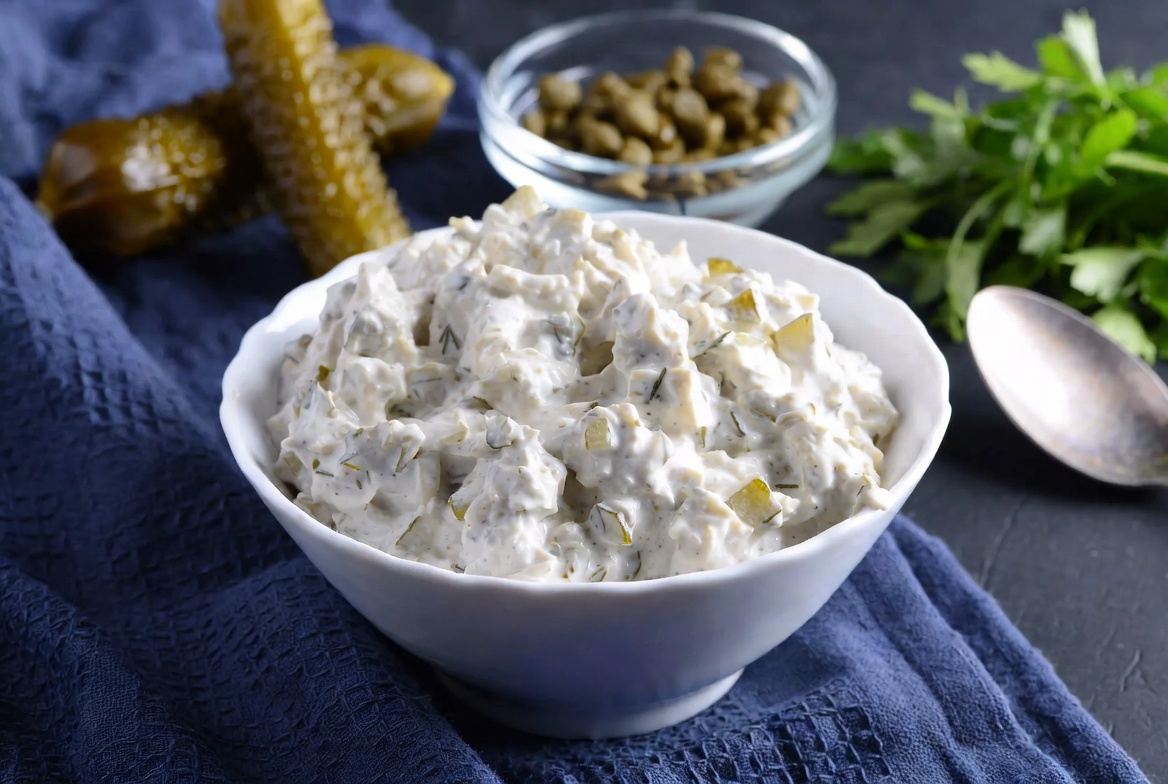
Expert tip: Adding a spoonful of blended nori boosts the oceanic flavor subtly. This version shines in warmer months when you want something bright and refreshing.
Variations: Add minced shallot for extra bite or a touch of maple for balance if using very tangy pickles.
Best with: Kale salads, cauliflower “fish” bites, or chickpea “tuna” bowls.
3. Smoky Spicy Seafood Dressing with Roasted Red Pepper
This bolder version adds depth and a gentle smoky heat, making it excellent for heartier salads or when you want a dressing that stands out. The roasted red pepper brings natural sweetness and color while complementing the briny notes.
Ingredients (makes ~1 cup):
- ½ cup vegan mayonnaise or blended silken tofu
- ¼ cup roasted red pepper (from jar, drained and chopped)
- 1 tbsp capers, chopped
- 2 tbsp dill pickle relish
- 1 tbsp fresh lemon juice
- 1 tsp smoked paprika
- ½ tsp cayenne pepper (adjust to taste)
- 1 tsp garlic powder
- ¾ tsp Old Bay seasoning
- 1 tbsp fresh parsley or cilantro, chopped
- 1 tsp vegan Worcestershire or tamari
- Salt to taste
Instructions:
- Blend the roasted red pepper with the creamy base, lemon juice, and Worcestershire until mostly smooth (some texture is welcome).
- Stir in the capers, relish, smoked paprika, cayenne, garlic powder, Old Bay, and herbs.
- Taste and fine-tune the heat and salt levels. For a smoother consistency, blend again briefly.
- Chill for at least 20 minutes to allow the smoky flavors to develop fully.
Prep time: 7 minutes | Yield: 1 cup | Approx. nutrition per 2 tbsp (tofu base): 45–70 calories, lower fat, added vitamin C from red pepper.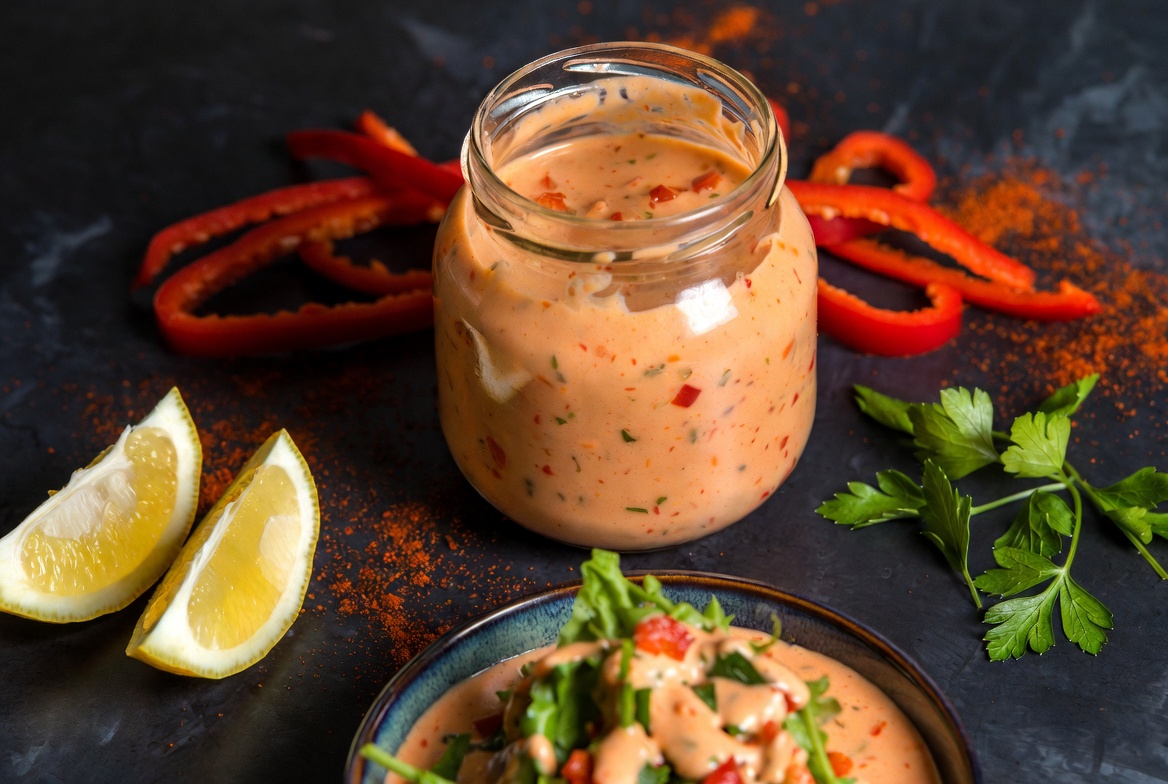
Why this works: The roasted red pepper introduces a subtle caramelized sweetness that balances the spice and brininess, preventing the dressing from tasting one-dimensional. During recipe development, this version became a favorite for those transitioning to plant-based eating who missed bolder flavors.
Customizations: Reduce cayenne for milder palates or add a pinch of liquid smoke (use sparingly) for extra depth in oil-free versions. Make it fully WFPB by using homemade roasted peppers and tofu base.
Pairing suggestions: Toss with roasted cauliflower florets, chickpeas, and mixed greens for a satisfying main salad, or serve alongside jackfruit “crab” cakes.
4. Fresh Herb & Lemon Seafood Dressing (Lighter Version)
For days when you want something brighter and less creamy, this herb-forward dressing delivers plenty of “seafood” character with a refreshing, zesty lift. It’s closer to a vinaigrette-meets-creamy hybrid and works beautifully with delicate greens.
Ingredients:
- ⅓ cup silken tofu or ¼ ripe avocado (mashed smooth)
- 3 tbsp fresh lemon juice
- 2 tbsp extra virgin olive oil (optional—omit for oil-free)
- 2 tbsp finely chopped fresh dill
- 2 tbsp finely chopped fresh parsley
- 1 tbsp capers, minced
- 1 small garlic clove, grated
- ½ tsp Dijon mustard
- ½ tsp dulse flakes or nori powder
- ¼ tsp Old Bay seasoning
- Pinch of black pepper and sea salt
Instructions:
- Blend the tofu (or avocado), lemon juice, mustard, garlic, and dulse until creamy.
- Stir in the fresh herbs, capers, Old Bay, and pepper.
- If using oil, whisk it in last for better emulsion. Taste and add more lemon if needed for brightness.
- Let sit 10 minutes for flavors to meld.
Prep time: 5 minutes | Yield: ~¾–1 cup | Nutrition highlight: Very light (~30–55 calories per 2 tbsp), high in fresh antioxidants from herbs and citrus.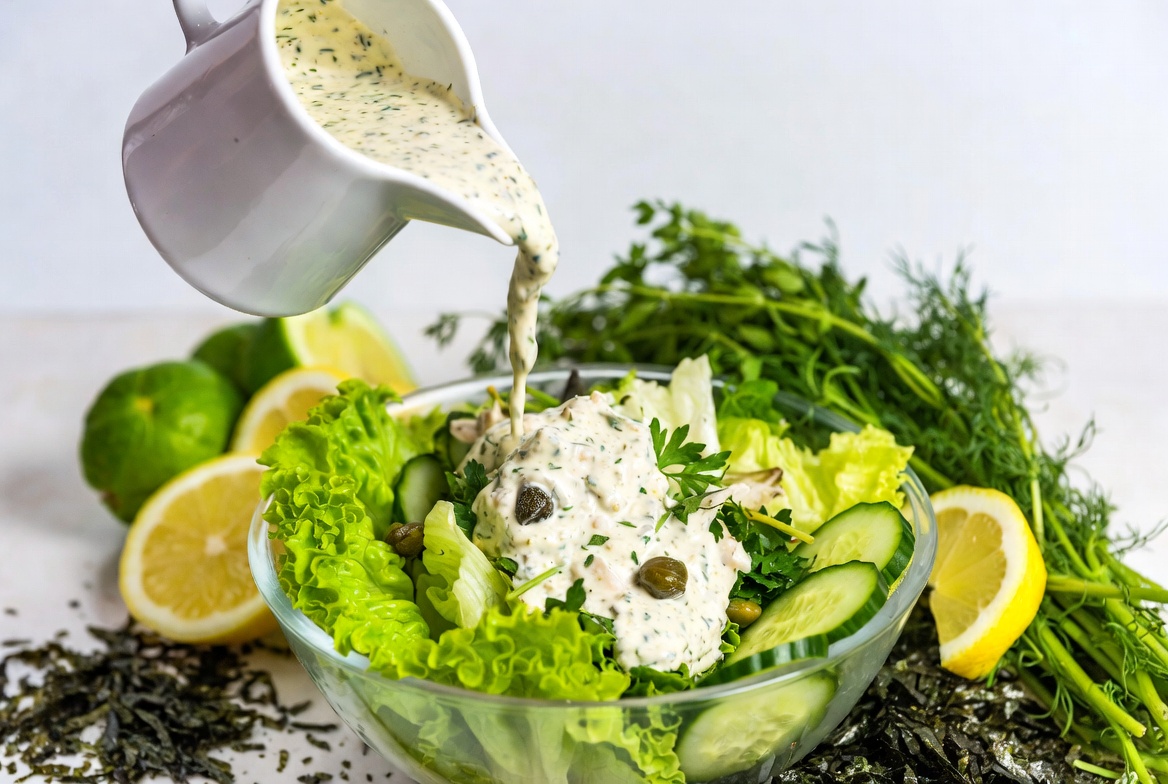
Expert insight: This recipe proves that “seafood dressing” doesn’t always need heavy creaminess. The generous herbs and lemon zest create an elevated, garden-fresh profile that still reads as coastal. It’s especially popular in spring and summer when produce is at its peak.
Variations: Add chopped chives or a few mint leaves for a unique twist. For more body, increase the tofu slightly.
Best uses: Light cucumber and tomato salads, quinoa bowls with steamed broccoli, or as a marinade for grilled portobello “steaks.”
5. Creamy Cajun-Inspired Seafood Dressing
This robust, Louisiana-style dressing brings bold heat and savory depth—perfect when you want your plant-based salads to feel indulgent and satisfying.
Ingredients:
- ½ cup vegan mayo or silken tofu base
- 2 tbsp Dijon mustard
- 1 tbsp lemon juice + 1 tsp zest
- 2 tbsp finely chopped pickles
- 1 tbsp capers
- 1–2 tsp Cajun seasoning (or homemade blend: paprika, garlic powder, onion powder, oregano, thyme, cayenne)
- ½ tsp smoked paprika
- 1 tsp hot sauce (such as Crystal or Louisiana-style)
- 1 tbsp fresh parsley, chopped
- ½ tsp vegan Worcestershire
- Salt and black pepper to taste
Instructions:
- Whisk the base with mustard, lemon juice, hot sauce, and Worcestershire until smooth.
- Add pickles, capers, Cajun seasoning, smoked paprika, and parsley. Mix thoroughly.
- Adjust heat and seasoning to preference. For extra creaminess, blend briefly.
- Refrigerate 15–30 minutes before serving.
Prep time: 6 minutes | Yield: 1 cup | Approx. nutrition per 2 tbsp (mayo base): 85–110 calories; tofu version significantly lighter.
Why this works: The combination of Cajun spices with classic remoulade elements creates a lively, addictive flavor that elevates even the simplest bowl of greens or shredded cabbage. Multiple rounds of testing confirmed the right balance of heat without overwhelming the other notes.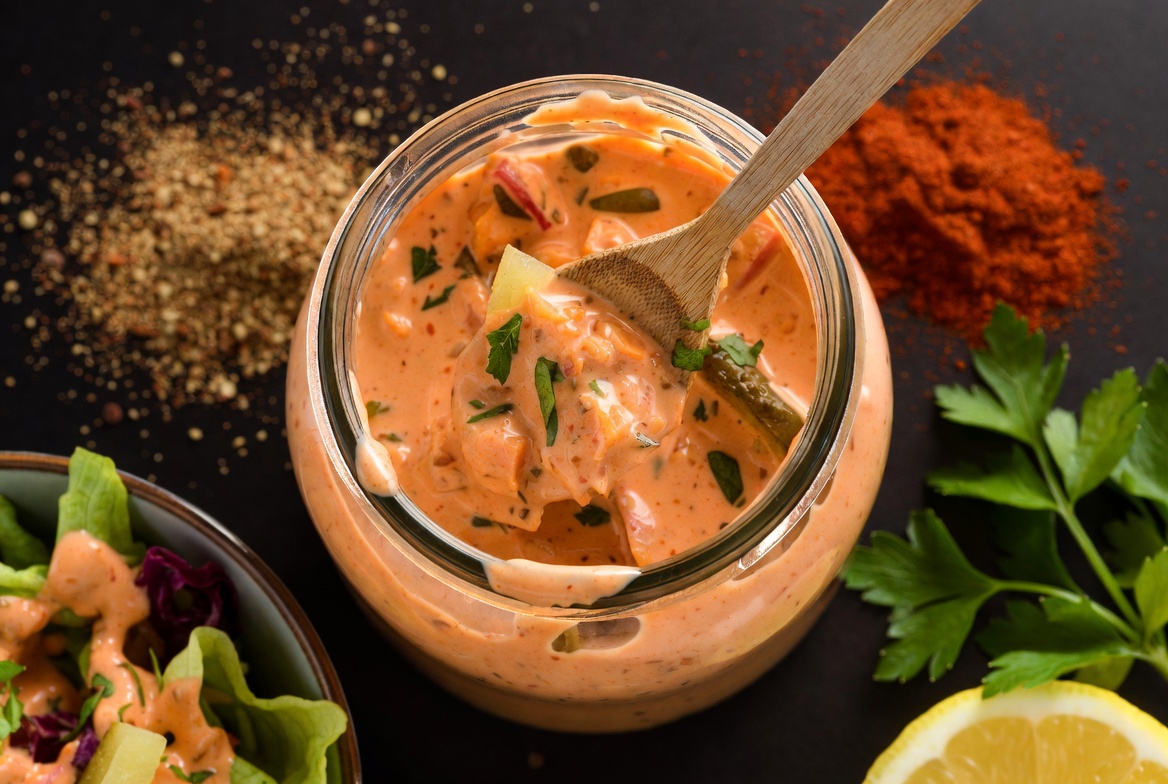
Customizations: Dial down the hot sauce for family-friendly versions or add a touch of maple syrup for sweet-heat balance. Fully oil-free and WFPB adaptable.
Pairing ideas: Excellent with black-eyed pea salads, roasted sweet potato bowls, or as a dipping sauce for air-fried oyster mushrooms.
How to Use These Plant-Based Seafood Dressings
These five plant-based seafood dressing recipes are far more versatile than traditional versions. They solve the common problem of repetitive salads by adding excitement and restaurant-quality flavor to everyday plant meals.
Creative Serving Ideas:
- Salads: Toss with mixed greens, cherry tomatoes, cucumber, avocado, and your favorite plant protein (tofu, tempeh, or lentils).
- Buddha Bowls: Drizzle over grain + roasted vegetable + green combinations for instant coastal flair.
- Sandwiches & Wraps: Use as a spread instead of plain mayo for elevated “fish” sandwich alternatives.
- Dips & Appetizers: Serve as a dipping sauce for raw veggies, roasted chickpeas, or baked potato wedges.
- Marinades: Thin slightly with water or lemon juice and use to marinate mushrooms, zucchini, or hearts of palm before grilling.
- Tacos & Slaws: Perfect topping for plant-based fish tacos or cabbage slaw.
Pairing Guide with Plant-Based “Seafood” Alternatives:
- Hearts of palm or banana blossom “crab” → Classic Remoulade or Tangy Tartar
- Jackfruit “scallops” or “crab” → Smoky Spicy or Cajun-Inspired
- Tofu “shrimp” or cauliflower “fish” → Fresh Herb & Lemon or any version
Meal Prep Tips: Prepare a batch on Sunday and store in glass jars. These dressings prevent “salad boredom” and make healthy eating effortless throughout the week. Most versions keep their flavor and texture well, turning ordinary lunches into something special.
A simple comparison shows the value:
| Aspect | Traditional Seafood Dressing | These Plant-Based Versions |
|---|---|---|
| Ingredients | Mayo + eggs + fish flavors | Plants only, customizable |
| Health Profile | Higher saturated fat | Lower fat options, more fiber/antioxidants |
| Customization | Limited | Oil-free, nut-free, spice level |
| Environmental Impact | Higher | Significantly lower |
Expert Tips for Perfecting Your Seafood Dressing Every Time
Achieving consistent results comes down to a few practiced techniques I’ve learned over years of recipe development:
- Taste as you go: Start with less seasoning and build up. Flavors intensify after chilling.
- Texture troubleshooting: Too thick? Add lemon juice or a splash of water/plant milk. Too thin? Blend in more base or chill longer.
- Storage: Store in airtight glass containers in the refrigerator for up to 5–7 days. Stir before use. Freezing is not recommended as texture may separate, though the Classic and Cajun versions hold up better.
- Scaling: Easily double or triple for gatherings. For single servings, mix directly in a small jar.
- Oil-free success: Use a high-speed blender for silken tofu to achieve the smoothest emulsion.
- Seasonal adaptations: In summer, emphasize fresh herbs and lemon. In winter, lean into smoky and spicy versions for warmth.
- Common mistakes to avoid: Over-salting early (capers and pickles add sodium), skipping the chill time, or using old spices.
For whole-food plant-based eaters, focus on homemade bases and fresh ingredients—the results are lighter and often more digestible.
Common Questions About Plant-Based Seafood Dressings (FAQs)
Can I make these dressings completely oil-free? Yes. Use silken tofu or mashed avocado as the base and omit any added oil. The texture remains creamy and satisfying.
What gives the “seafood” flavor without actual seafood? A thoughtful combination of nori/dulse (for oceanic notes), capers and pickles (briny tang), mustard, lemon, and Old Bay-style spices recreates the classic profile naturally.
How long do homemade plant-based seafood dressings last? Most stay fresh for 5–7 days in the refrigerator when stored properly in glass jars. Always check for off smells before use.
Are these suitable for whole food plant-based (WFPB) diets? Absolutely—choose the silken tofu or avocado bases and skip store-bought vegan mayo when it contains oil. All recipes are highly adaptable.
Can I use these as a dip or marinade? Yes. Thin slightly with water or extra lemon juice for marinades, or serve thicker as a dip for vegetables and plant-based appetizers.
What can I substitute for vegan mayonnaise? Silken tofu is the best all-around swap for a lighter result. Cashew cream works for richer texture.
Are these kid-friendly or adjustable for spice? Most are easily adjusted. Reduce or omit cayenne/hot sauce for milder versions. The Tangy Tartar and Fresh Herb versions are usually the most approachable for children.
Do these dressings provide any nutritional advantages? Compared to traditional versions, they can be lower in saturated fat and calories (especially tofu-based), while adding antioxidants, herbs, and sea vegetable minerals.
Conclusion
These five plant-based seafood dressing recipes prove that you don’t need animal products to enjoy the creamy, tangy, briny flavors you love in a classic seafood dressing recipe. From the versatile Classic Vegan Remoulade to the bright Fresh Herb & Lemon version, each one offers something special for your plant diet meals.
By mastering these simple combinations of whole-plant ingredients, you can transform everyday salads, bowls, and wraps into exciting, flavor-packed dishes that support your health goals without compromise. The best part? They’re quick to make, highly customizable, and far more delicious than most store-bought alternatives.
Start with the Classic Remoulade-Style dressing this week—it’s the perfect entry point. Experiment, adjust to your taste, and discover how these recipes can make your plant-based eating more enjoyable and sustainable.
If you try any of these, I’d love to hear which one became your favorite and how you used it. Share your creations in the comments or tag your photos when you make them. For more creative plant-powered recipes, salad ideas, and whole-food inspiration, explore the rest of the site.
Eating plants has never tasted this good.