Bridging the Gap Between Breast and Bottle
For many nursing parents, the thought of introducing a bottle can feel like a high-stakes gamble. Whether you are preparing to return to work, looking to share feeding duties with a partner, or simply need a few hours of uninterrupted sleep, the “bottle refusal” struggle is a real and stressful hurdle. You’ve likely heard the horror stories: babies who flat-out reject the silicone substitute or, conversely, babies who develop nipple confusion and begin to struggle with their natural latch.
The primary challenge is that most traditional nipples don’t function like the real thing. To find the best bottles for breast feeders, you have to look beyond basic aesthetics and focus on flow rate, compression mechanics, and tactile similarity. A bottle that flows too fast can lead to a “lazy latch,” while a rigid shape can cause a baby to reject the feed entirely out of frustration.
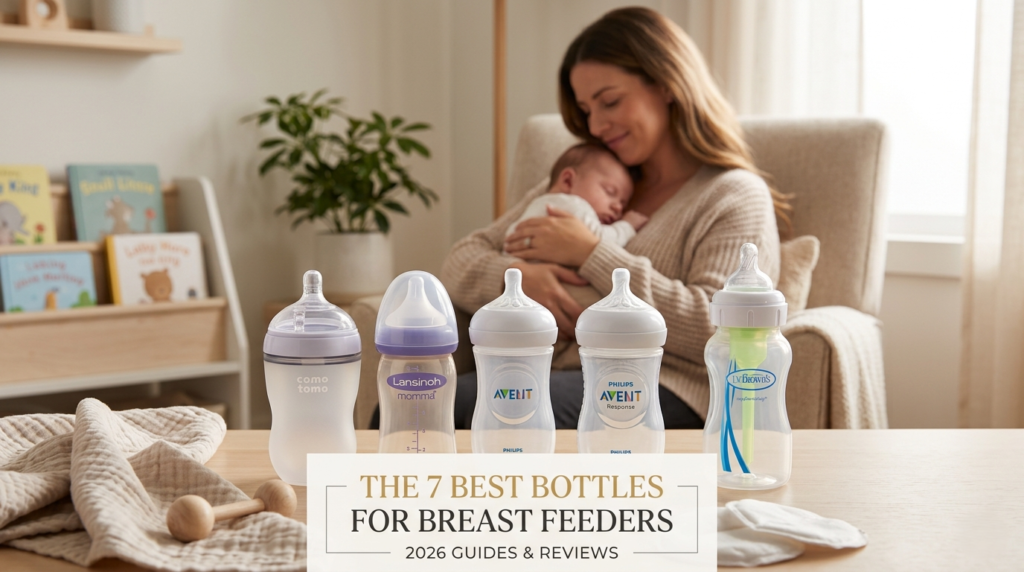
In this guide, we have done the heavy lifting for you. We’ve analyzed the latest 2026 data, consulted lactation principles, and pored over thousands of parent reviews to identify the best bottles for breast feeders currently on the market. Our goal is to help you transition with confidence, ensuring your baby stays nourished and your breastfeeding relationship remains intact.
Quick Comparison: Our Top Picks at a Glance
| Category | Product | Top Benefit |
| Best Overall | Comotomo Silicone | Mimics skin-to-skin feel |
| Best Latch | Lansinoh Momma | Prevents nipple confusion |
| Best Tech | Philips Avent Natural | Milk flow controlled by baby |
The Selection Criteria: How We Chose the “Best”
Not all bottles are created equal, especially when “competing” with a mother’s breast. Our selection process for the best bottles for breast feeders was based on four critical pillars:
-
Nipple Shape & Flexibility: We looked for “gradual slope” nipples. Unlike bulbs that have a sudden flare, a gradual slope encourages the baby to take a wide, deep latch—the same latch required for successful breastfeeding.
-
Flow Rate Control: For breastfed babies, “slow and steady” wins the race. We prioritized bottles with ultra-slow flow options to ensure the baby has to work for the milk, preventing them from becoming frustrated with the slower pace of the breast.
-
Material Safety: We evaluated medical-grade silicone, borosilicate glass, and BPA-free plastics to ensure every recommendation is non-toxic and durable.
-
Anti-Colic Technology: We prioritized designs that vent air away from the milk to reduce gas, spit-up, and fussiness.
Deep Analysis: The Top 7 Bottles for Breast Feeders
1. Best Overall: Comotomo Silicone Baby Bottle
The Comotomo has achieved legendary status in the parenting community for a reason: it doesn’t just look like a breast; it feels like one. Most bottles are made of hard, cold plastic, but the Comotomo features a soft, squeezable silicone body that provides a tactile experience similar to skin-to-skin contact.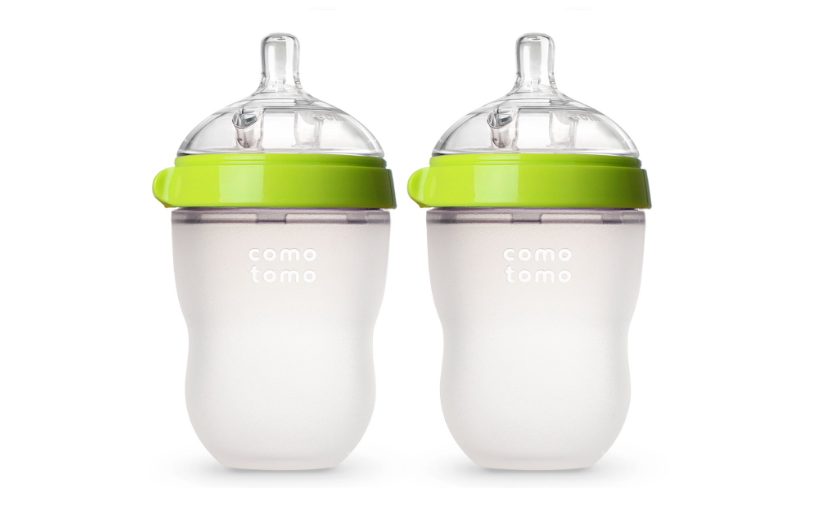
-
Price: ~$13 per bottle / ~$24 per 2-pack
-
Key Features: 360-degree wide-neck design for easy hand-cleaning; dual anti-colic vents; medical-grade silicone material.
-
Pros:
-
Texture mimics the breast, which can soothe a fussy baby.
-
Wide neck means you can clean it without a bottle brush.
-
Shatterproof and heat-resistant.
-
-
Cons:
-
The narrow, rounded base makes it prone to tipping over.
-
Silicone is a natural insulator, so it takes longer to warm up in a bowl of water.
-
-
Amazon Rating: 4.7/5 (35,000+ reviews)
-
Why it’s a good choice: It addresses the “sensory” side of feeding. If your baby is refusing a bottle because it feels “unnatural,” the squishy texture of the Comotomo is often the solution.
-
Ideal Use Case: Perfect for babies who have “struck” against traditional plastic bottles or those who find comfort in the tactile feel of nursing.
2. Best for Natural Latch: Lansinoh Momma with NaturalWave Nipple
Lansinoh is a brand built on breastfeeding support, and their Momma bottle is a testament to that mission. The NaturalWave nipple is backed by over 50 years of research and is specifically designed to encourage the same peristaltic tongue movement babies use during breastfeeding.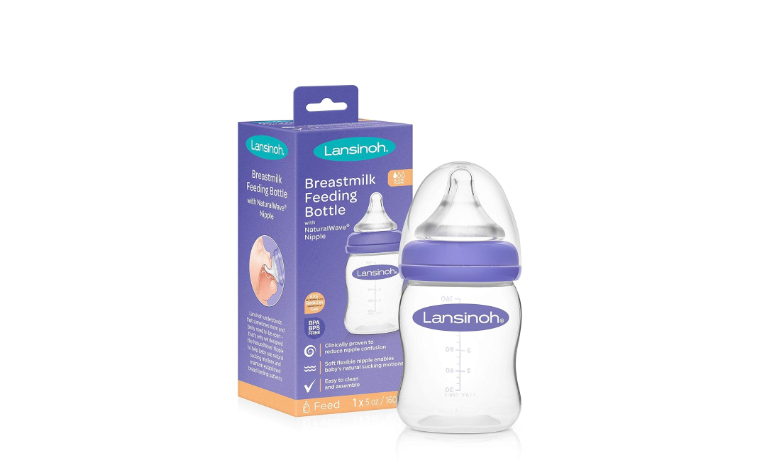
-
Price: ~$20 for a 3-pack
-
Key Features: Clinically proven to reduce nipple confusion; AVENT-style simple venting; matte-textured nipple for a secure seal.
-
Pros:
-
Super simple 3-piece design (no tiny parts to lose).
-
Nipple is extra soft and flexible, allowing the baby to control the flow.
-
Directly compatible with Lansinoh breast pumps.
-
-
Cons:
-
Currently only available in plastic (PP), though it is BPA/BPS free.
-
-
Amazon Rating: 4.8/5
-
Why it’s a good choice: This is arguably the best bottles for breast feeders when it comes to maintaining the mechanics of the latch. It prevents the baby from developing a “lazy” bottle latch that could hurt the mother during later nursing sessions.
-
Ideal Use Case: The “gold standard” for parents who plan to breastfeed long-term and only want a bottle for occasional use or for the return to work.
3. Best High-Tech: Philips Avent Natural Response
The “Natural Response” line is a major upgrade from the classic Avent bottles. The nipple features a unique opening that only releases milk when the baby is actively drinking. When the baby stops to swallow or breathe, the milk stops—just like the breast.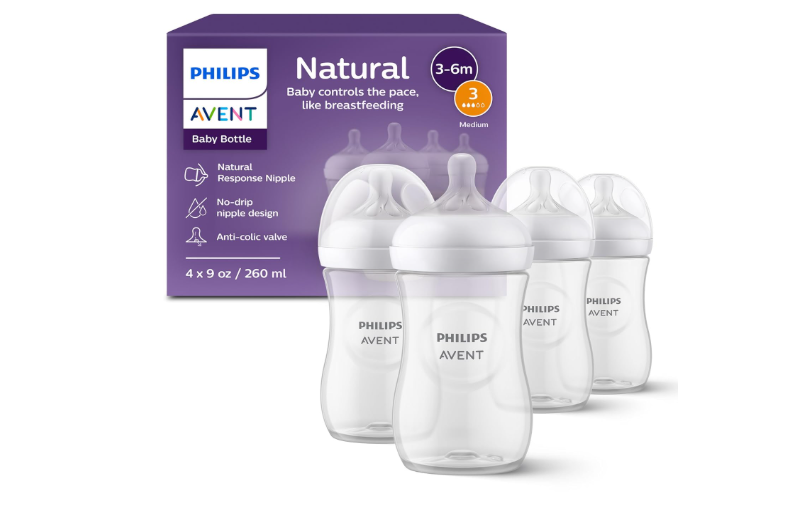
-
Price: ~$29 for a 4-pack
-
Key Features: No-drip nipple tip; AirFree vent insert designed to keep the nipple full of milk (not air).
-
Pros:
-
Prevents messy drips and wasted breast milk.
-
Baby controls the pace entirely, reducing the risk of overfeeding.
-
Wide breast-shaped nipple makes for an easy transition.
-
-
Cons:
-
The new nipple design is different from the “old” Avent Natural; if your baby liked the old one, they may need time to adjust.
-
-
Amazon Rating: 4.6/5
-
Why it’s a good choice: It eliminates the “firehose effect” found in many bottles where milk pours out even when the baby isn’t sucking.
-
Ideal Use Case: Excellent for “combination feeders” who switch back and forth between the breast and the bottle daily.
4. Best for Colic & Gas: Dr. Brown’s Options+ Anti-Colic
Dr. Brown’s is the most recommended bottle by pediatricians for babies struggling with digestive discomfort. The “Options+” system features a unique internal green vent that creates a 100% vacuum-free feeding experience, which is the closest a bottle can get to the natural pressure of breastfeeding.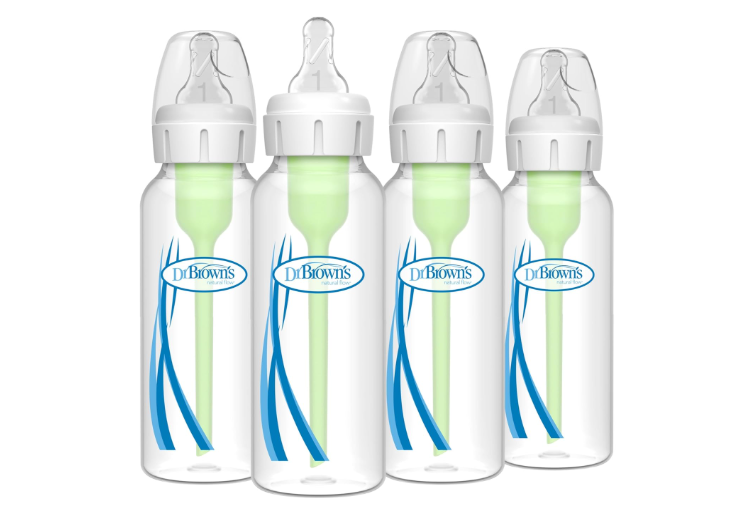
-
Price: ~$25 for a 4-pack
-
Key Features: Patented internal vent system; vacuum-free feeding; multiple nipple levels including “Ultra-Preemie.”
-
Pros:
-
Clinically proven to reduce colic, burping, and gas.
-
Helps preserve vitamins C, A, and E by minimizing milk oxidation.
-
Vent can be removed as the baby’s digestion matures.
-
-
Cons:
-
More parts to clean (5 per bottle) than any other brand.
-
Can leak if the cap isn’t aligned perfectly.
-
-
Amazon Rating: 4.8/5
-
Why it’s a good choice: It ensures that the air stays in the bottle and out of the baby’s tummy, mimicking the air-free environment of a deep breast latch.
-
Ideal Use Case: Gassy babies or those with infant reflux who need a consistent, air-free flow.
5. Best for Modern Innovation: Nanobébé Flexy Silicone
Nanobébé revolutionized the industry with their original “breast-shaped” bottle, and the Flexy Silicone is their high-performance follow-up. It combines a stable, non-tipping base with an ultra-soft silicone nipple that is widely considered one of the softest on the market.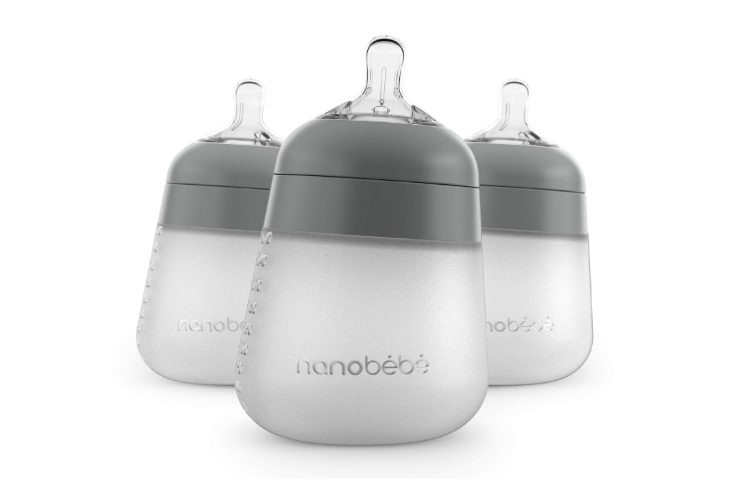
-
Price: ~$24 for a 3-pack
-
Key Features: Triple-vented nipple; non-tipping stable base; medical-grade silicone.
-
Pros:
-
The “Flexy” nipple prevents collapse even during vigorous sucking.
-
Stable base prevents the “toppling” issue common with other silicone bottles.
-
Minimalist design is very easy to assemble.
-
-
Cons:
-
The wide diameter may not fit in the side pockets of some smaller diaper bags.
-
-
Amazon Rating: 4.7/5
-
Why it’s a good choice: It provides the “skin-like” benefits of silicone without the annoyance of a bottle that tips over on your nightstand.
-
Ideal Use Case: Parents who want a premium, modern silicone bottle that is both functional and aesthetically pleasing.
6. Best Eco-Friendly / Glass: Joovy Boob Glass Bottle
If you are concerned about microplastics or chemical leaching, glass is the way to go. The Joovy Boob is made from high-quality borosilicate glass, which can go from the freezer to boiling water without shattering.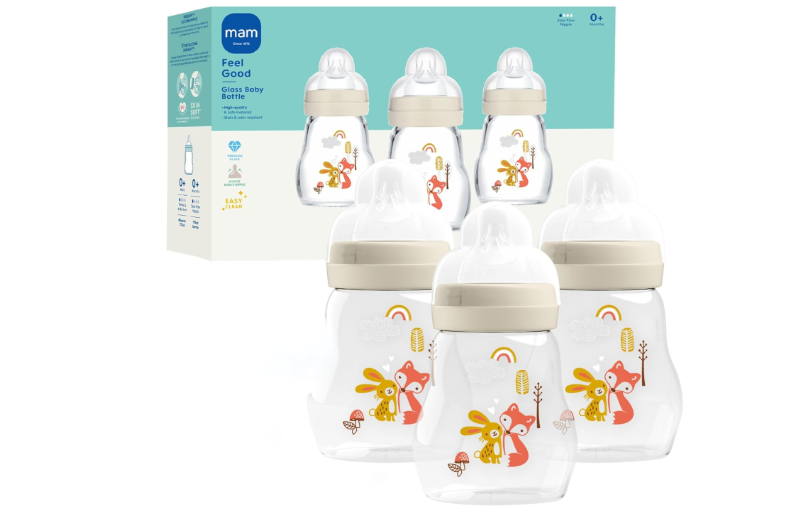
-
Price: ~$20.99 $7.00 per count($7.00 / count)
-
Key Features: 1-piece CleanFlow vent system; protective silicone sleeve included; borosilicate glass construction.
-
Pros:
-
Glass does not absorb odors, tastes, or stains.
-
Very hygienic and easy to sterilize.
-
The silicone sleeve provides a great grip and drop protection.
-
-
Cons:
-
Heavier than plastic or silicone; older babies may struggle to hold it.
-
More expensive per unit.
-
-
Amazon Rating: 4.5/5
-
Why it’s a good choice: It offers a clean, pure feeding experience with a nipple shape that mimics a natural wide-base latch.
-
Ideal Use Case: Eco-conscious parents prioritizing sustainability and the highest level of hygiene.
7. Best Value: Tommee Tippee Closer to Nature
Tommee Tippee was one of the first brands to market a “breast-like” shape, and they remain a favorite for their affordability and effectiveness. The nipple mimics the natural flex, stretch, and movement of a mother’s breast.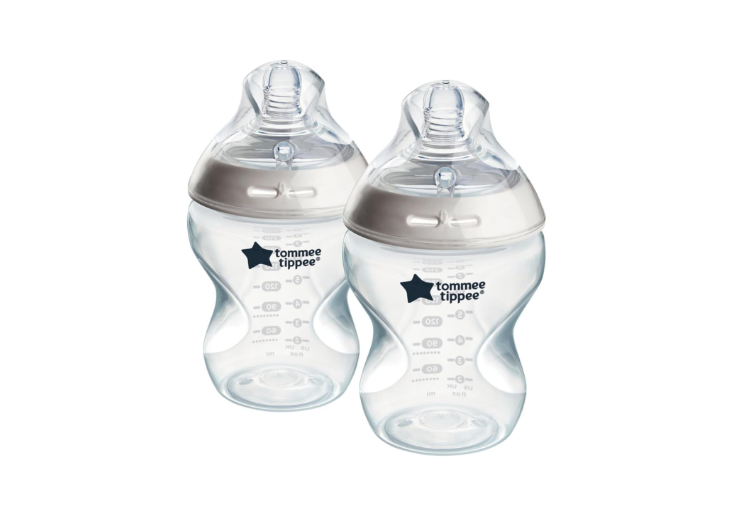
-
Price: ~
$5.90 per count -
Key Features: Super-wide neck; sensitive anti-colic valve; ergonomic “easy-hold” bottle shape.
-
Pros:
-
Extremely budget-friendly without sacrificing quality.
-
Available in almost every major retail store globally.
-
Compatible with a wide range of Tommee Tippee accessories.
-
-
Cons:
-
Nipples can sometimes “cave in” if the tiny vent valve isn’t pinched open before use.
-
-
Amazon Rating: 4.7/5
-
Why it’s a good choice: It provides a solid “breast-to-bottle” transition at a fraction of the price of boutique brands.
-
Ideal Use Case: Families who need to stock up on many bottles for daycare or those looking for a reliable, widely available option.
The Decision Engine: Comparison Matrix
For a quick reference to help you decide which of the best bottles for breast feeders fits your lifestyle, use the table below:
| Bottle Model | Primary Material | Main Benefit |
| Comotomo | Silicone | Skin-like tactile feel |
| Lansinoh | BPA-Free Plastic | Protects natural latch |
| Philips Avent | BPA-Free Plastic | Baby-controlled flow |
| Dr. Brown’s | Glass or Plastic | Best for gas/colic |
| Nanobébé | Silicone | Non-tip silicone design |
| Joovy Boob | Borosilicate Glass | Eco-friendly & hygienic |
| Tommee Tippee | BPA-Free Plastic | Best value for money |
Buying Guide: 5 Tips for a Tear-Free Transition
Finding the best bottles for breast feeders is only half the battle. Use these expert tips to ensure your baby actually takes the bottle:
-
Start with the “Slowest” Flow: Regardless of your baby’s age, start with a “Level 0” or “Preemie” nipple. Breast milk flow varies, but it is rarely as fast as a standard Level 1 bottle nipple.
-
The “Paced Bottle Feeding” Technique: Hold the bottle horizontally rather than tipped vertically. This forces the baby to actively suck for the milk, preventing them from becoming “lazy” and later rejecting the breast.
-
Temperature Matters: Most babies are used to milk at exactly 98.6°F. Use a bottle warmer or a bowl of warm water to ensure the milk is body temperature—not too hot, and not fridge-cold.
-
The “Someone Else” Rule: Babies can smell Mom’s milk from across the room. If you try to give the bottle, they may refuse because they know the “original source” is right there. Have a partner or caregiver offer the first few bottles.
-
Check the Vent: Before every feed, pinch the anti-colic vent to ensure it’s open. If the vent is stuck shut, it creates a vacuum that makes it impossible for the baby to drink.
Conclusion & Final Verdict
Choosing the best bottles for breast feeders doesn’t have to be a trial-and-error nightmare. If you want the most lifelike experience, the Comotomo Silicone Bottle is our top pick. For those worried about preserving their baby’s latch mechanics, the Lansinoh Momma is a clinical favorite.
Remember, every baby is unique. It may take a few tries before your little one finds their favorite, but with the options on this list, you are setting yourself up for success.
Frequently Asked Questions
How do I prevent nipple confusion?
The best way to prevent nipple confusion is to use a bottle with a “gradual slope” nipple and practice paced bottle feeding. This ensures the baby uses the same muscles and effort they would at the breast.
When is the best time to introduce a bottle?
Most lactation consultants recommend waiting until breastfeeding is well-established, typically around 3 to 4 weeks of age.
Can I use these bottles for formula too?
Absolutely. While these are the best bottles for breast feeders, they work exceptionally well for formula-fed babies who prefer a natural nipple shape or suffer from colic.